



Following Lafayette’s Footsteps Across Bucks County
Written by Jessica Lordi, DLNHC intern
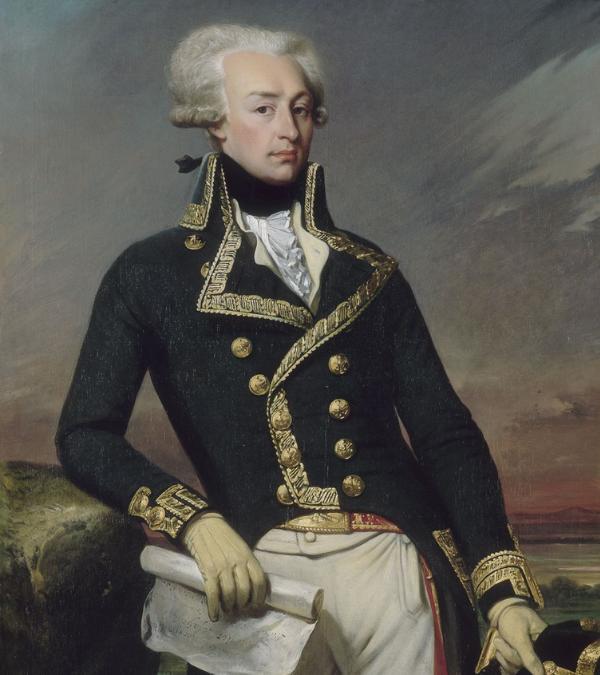
There are many cities and towns in the United States named for the Revolutionary War hero the Marquis de Lafayette, but not all of them have a personal connection to them like Bucks County does. Lafayette visited the area twice, first as a young soldier recovering from a wound during the war and later as a symbol of American independence and strength. Lafayette traveled through and left his mark on several different towns in the county, and all of them remember him for his bravery and commitment to the young nation he helped found.
When Lafayette first traveled to the United States, he was young and inexperienced but felt the need to give himself to the cause of American independence after learning of the war against Great Britain. It was not the expected course of action for a member of the French aristocracy, but he was compelled to lend whatever aid he could. As he wrote to his wife Adrienne in April, 1777:
“The happiness of America is intimately connected with the happiness of all mankind; she is destined to become the safe and venerable asylum of virtue, of honesty, of tolerance, and quality and of peaceful liberty.” (Noted Colonial Americans…, 2015)
Lafayette’s first encounter with Bucks County came on his arrival in Pennsylvania in August of 1777. He traveled to the Moland House in Hartsville, Pennsylvania, with his commission from the Congress to join the Continental Army as a Major General. Initially, General Washington did not want him there. Washington didn’t think there was a place for someone so inexperienced in combat, especially when the more senior roles in his army were already filled with seasoned veterans. He eventually relented and asked Lafayette to join him. While staying in the army encampment near Moland House, Lafayette occupied a house near the Neshaminy Church. It was while staying in the house that Washington reportedly said to Lafayette, “It is somewhat embarrassing to us to show ourselves to an officer who has just come from the army of France.” To this, Lafayette responded by saying, “I am here to learn, and not to teach” (Noted Colonial Americans…, 2015).
From Neshaminy Creek, Lafayette and Washington’s 11,000 troops marched to Brandywine in Delaware County, near Philadelphia. There, Lafayette was wounded during the Battle of Brandywine by a musket shot to his leg. After leading the retreat of American troops, Lafayette was transported to Bristol, Pennsylvania, on a boat that sailed on the Delaware River through Philadelphia and Chester. In Bristol, he was treated in the home of Simon Betz, located on Radcliffe Street, and spent the night there. The next day he set out on a trip to Bethlehem, taking Durham Road (now Route 413) and staying in the home of Ambrose Rauch on Main Street.
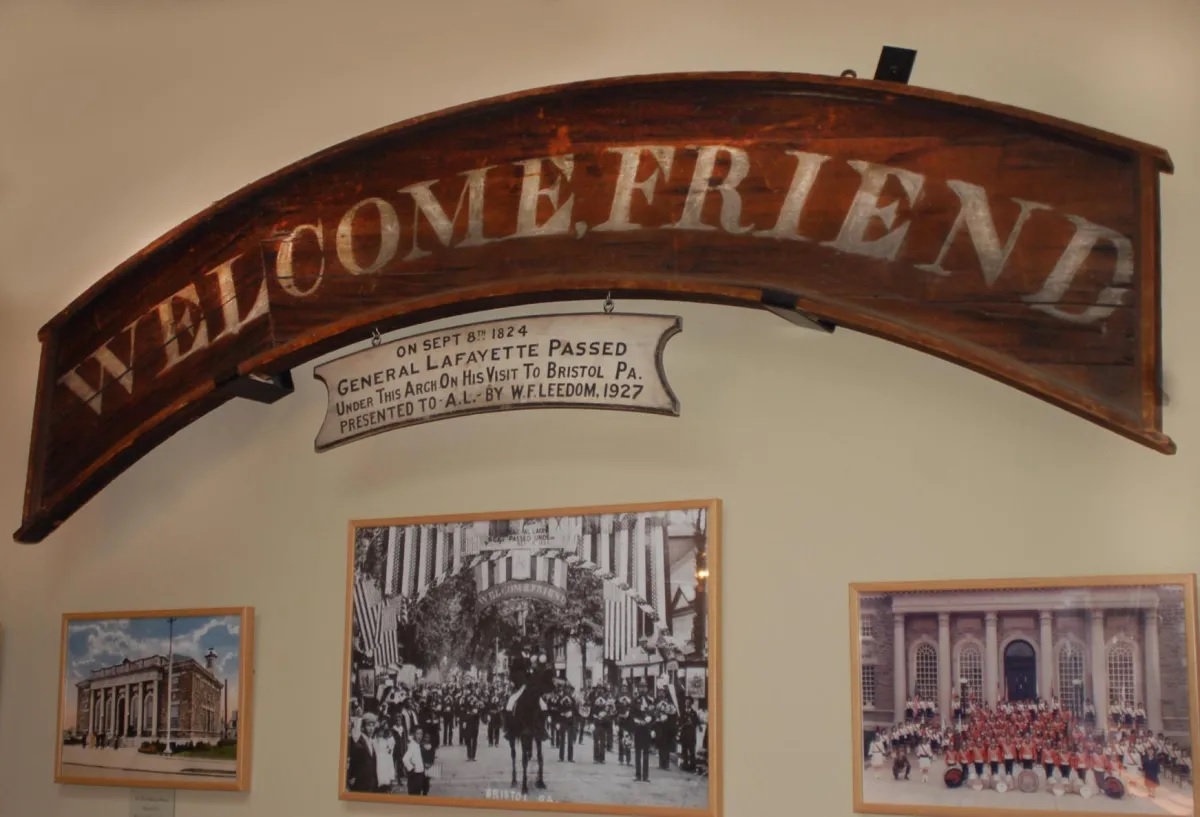
Bucks County News. (2013, April 13). Hidden gem of Bristol: ‘Welcome Friend’ arch to compete in Save Pennsylvania’s Past contest. The Reporter.
Lafayette was always devoted to the cause of American independence from Great Britain. He wrote to Henry Laurens, then serving as the president of Congress, in 1778:
“The moment I heard of America I loved her; the moment I knew she was fighting for freedom I burnt with a desire of bleeding for her; and the moment I shall be able to serve her, at any time, or in any part of the world, will be the happiest of my life.” (LaVO, 2017)
Nearly fifty years after the Battle of Brandywine, and more than forty years since the Battle of Yorktown that ended the Revolution with a divisive win for the United States of America, Lafayette returned to tour the country he had such a large part in preserving in its infancy. Following the tumultuous presidential election of 1824, President James Monroe hoped that a visit from the last hero of the Revolution would help to bring the country together and foster a spirit of unity. Lafayette’s arrival in New York City was met with parades, parties, and overwhelming joy. He traveled first into New England and then returned south, crossing the Delaware River from New Jersey into Morrisville, Pennsylvania, on September 27th, 1824. He was greeted by crowds of people and military personnel, including Colonel John Davis of the Bucks County Militia. Davis’s father had been present at the Battle of Brandywine, and had helped carrying Lafayette off the field after he was injured.
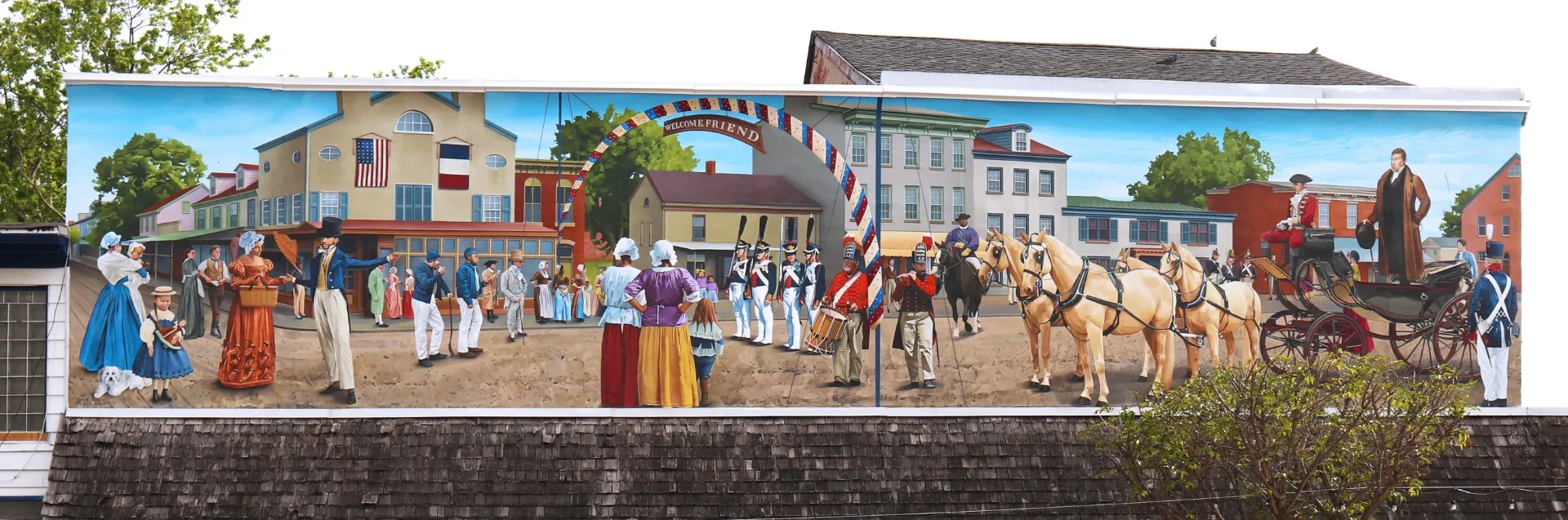
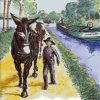
Lafayette was able to visit multiple places in Bucks County that he had last seen during the Revolutionary War as a young general. Preparations for his arrival had been underway for weeks. After visiting Philadelphia, Lafayette continued to Bristol, entering the town by way of the King’s Highway (now Old Route 13) where he was greeted by a banner reading “Welcome Friend.” This phrase remains the town’s motto to this day. Bristol is also the terminus of the Delaware Canal, which began operation in 1832. One contemporary reported noted that “Young and old alike, men, women, and children, some only babies in their mother’s arms, lined the streets cheering and waving to General Lafayette” (LaVO, 2017). Lafayette also traveled through Andalusia in Bensalem Township and Croydon in Bristol Township, before heading south for the rest of his year-long tour through the twenty-four states in America. At the end of his tour, Lafayette was hosted at the White House for a farewell dinner, where he lifted his glass and toasted the United States by saying, “To the perpetual union of the United States. It has already saved us in the times of storm. One day it will save the world” (LaVO, 2017).
Two hundred years after Lafayette’s visit, the mayor of Bristol unveiled a new marker for Lafayette Street and dedicated a new mural of Lafayette and Bristol to the town. Artist Jared Bader drew on historical resources to accurately depict how Bristol appeared at the time of Lafayette’s visit. Working with advisors including the Bristol Historical and Cultural Foundation, and Robert Marquis, the owner of the building where the mural was to be painted, Bader constructed a draft in Photoshop before painting the mural, which overlooked a re-enacted parade through town recreating Lafayette’s arrival. We may ask ourselves why a wealthy young Frenchman would travel over an ocean to throw himself into a cause that had little bearing on his own life. The answer may lie in the motto on Lafayette’s family coat of arms: “Cur Non?” or, in English, “Why Not?” (Noted Colonial Americans…, 2015). His sacrifices are recognized to this day and the people of Bucks County are still grateful to the Marquis de Lafayette for everything he did to secure their freedom and found their nation.
Resources
Ciliberti, D. (2024, September 27). Revolutionary War Hero Beloved In Bucks: Phun Philly Phacts. Levittown, PA Patch; Patch. https://patch.com/pennsylvania/levittown/revolutionary-war-hero-beloved-bucks-phun-philly-phacts
Davis, W.W.H. 1876. The History of Bucks County, Pennsylvania. 1st ed. Doylestown, PA: Democrat Book and Job Office Print. https://archive.org/details/ldpd_8671657_000/page/n5/mode/2up.
General Lafayette. (n.d.). www.thelafayettetrail.org. https://www.thelafayettetrail.org/lafayette/
LaVO, C. (2017, June 26). LaVO: Revolutionary War hero Lafayette shared a special bond with Bucks County. PhillyBurbs; Bucks County Courier Times. https://www.phillyburbs.com/story/lifestyle/columns/2017/06/26/lavo-revolutionary-war-hero-lafayette/18209363007/
Noted Colonial Americans at the Moland House | Moland House. (2015). Moland.org. https://moland.org/noted-colonial-americans-at-the-moland-house/
Tour, L. (2025). Visit Bristol Borough. Visit Bristol Borough. https://borough-site-wip.squarespace.com/lafayette
Join the Conversation!