



Early Aviation in the Corridor
The safe emergency landing of a small private airplane near the Kutztown exit of I-78 on April 4 harkens back to the earliest days of aviation in the DLNHC Corridor. In the 1920s, veterans of World War I aerial dogfights and amateur aviation enthusiasts seized the opportunity to buy surplus military training aircraft and take to the skies. They just had to find places to take off from and land.
This led to many impromptu landings on farmers’ fields, where fliers often offered airplane rides for a fee to the local people and shared the money with the owners of the fields. They also paid to shelter their planes in the farmers’ barns in the event of bad weather—the origin of the word “barnstormers.”
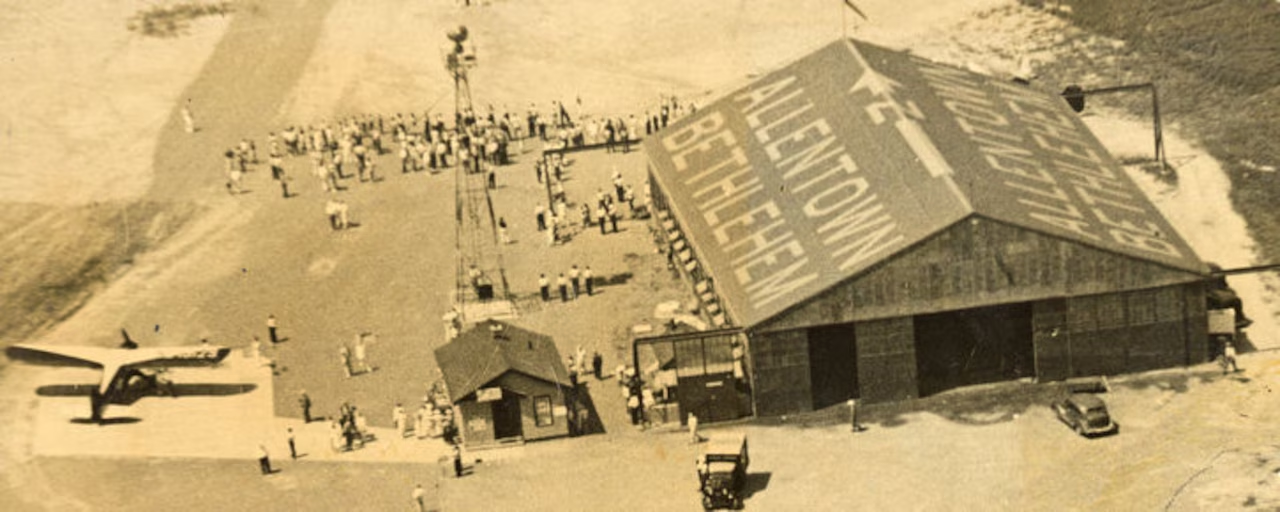
During the 1920s and 30s, several flat, grassy sites in our region sprouted air strips created by landowners, flying instructors, businessmen with an eye to boosting their local economies, and local and national governments. When the US Post Office Department expanded Air Mail coast-to-coast in the 1920s and contracted the services of commercial aviation companies, the Department of Commerce authorized the development of 89 emergency landing fields across the nation. They were laid out in rural areas and equipped with a beacon and sometimes a searchlight, like the 99-year-old one still operating at Lehigh Valley International.
How the Lehigh Valley got an airport
In 1927, the Department of Commerce rented 50 acres of Hanover Township farmland as an emergency landing place for air mail pilots. Two years later, the Allentown Airport Corporation bought that property and an additional 315 acres with the goal of building an actual airport. The city of Allentown took over the title to the financially strapped airport in the 1930s to make it eligible for Works Projects Administration (WPA) funding. Three new runways and a new terminal building were constructed. In 1948, the Lehigh-Northampton Airport Authority was formed, again for federal funding, and the name changed to Allentown-Bethlehem-Easton Airport. In 1994, the name was changed to Lehigh Valley International Airport, though the International Air Transport Association (IATA) airport code (found on your luggage tag when you fly to Allentown) remains ABE.
Airstrips—in more ways than one
According to the website Abandoned & Little-Known Airfields an emergency landing airstrip was designated in Martin’s Creek in 1935. On December 7, 1941, a small airport opened on the site, which fortunately was just outside the East Coast No-fly Zone for private aircraft that was immediately established when the US entered World War II. The wartime boom in employment allowed people to take flying lessons and even buy their own small planes, so the owner (a man known only as Charlie) built a hanger, trained amateur pilots, and even opened a guest house – the Martins Creek Pilots Club on the Delaware River – where people could stay for weekends of flying. Several women got their flight training at Martins Creek. Despite the airport’s apparent popularity during the war years, it went out of business in the late 1940s, and no trace of it remains.
In Carbon County, an emergency landing gave landowners the idea of opening a designated airstrip of their own. In 1948, a pilot made a forced landing in a clearing at Sunny Rest, a clothing-optional resort outside Palmerton. The owners, a couple named Suplee, carved two unpaved runways into the land, apparently with the idea of attracting like-minded people to fly in. Aeronautic maps show that the unpaved runway had been extended to over 2000 feet in length by 1960 but apparently fell into disuse soon after. However, Sunny Rest Resort and Campground still welcomes guests who can pack lightly for their stay.
Wings Over Lehighton
A more successful airfield –though one that also began on grass—was founded outside of Lehighton in 1928. Martin Jensen was one of only two pilots who survived the misbegotten Dole Pineapple Air Race from California to Hawaii in 1927. He arrived in Pennsylvania the following year with the idea of starting a factory for building airplanes, but the financial crash of 1929 ended that dream. He sold the airfield he had enlarged alongside the Carbon County Fairgrounds to Jake Arner in 1930, and Arner operated it successfully, becoming a local legend for his air shows and plane rides for fairgoers well into the 1960s. The airfield and the fairgrounds were replaced by Lehighton Area High School in 1993.
The Jake Arner Memorial Airport in Mahoning Township offers light airplane services and repairs and a flight school, as well as a base for the St. Luke’s medical helicopter.
Bristol: Ships to Sea Planes to Shyamalan
The Borough of Bristol in southern Bucks County has a three-century history of transportation, industry, and commerce. It was a shipbuilding center in the 18th century, and the southern terminus of the Delaware Division Canal, where millions of tons of anthracite coal transited to markets from 1834 to 1930. Shipbuilding returned during World War I but ended abruptly when the war was over.
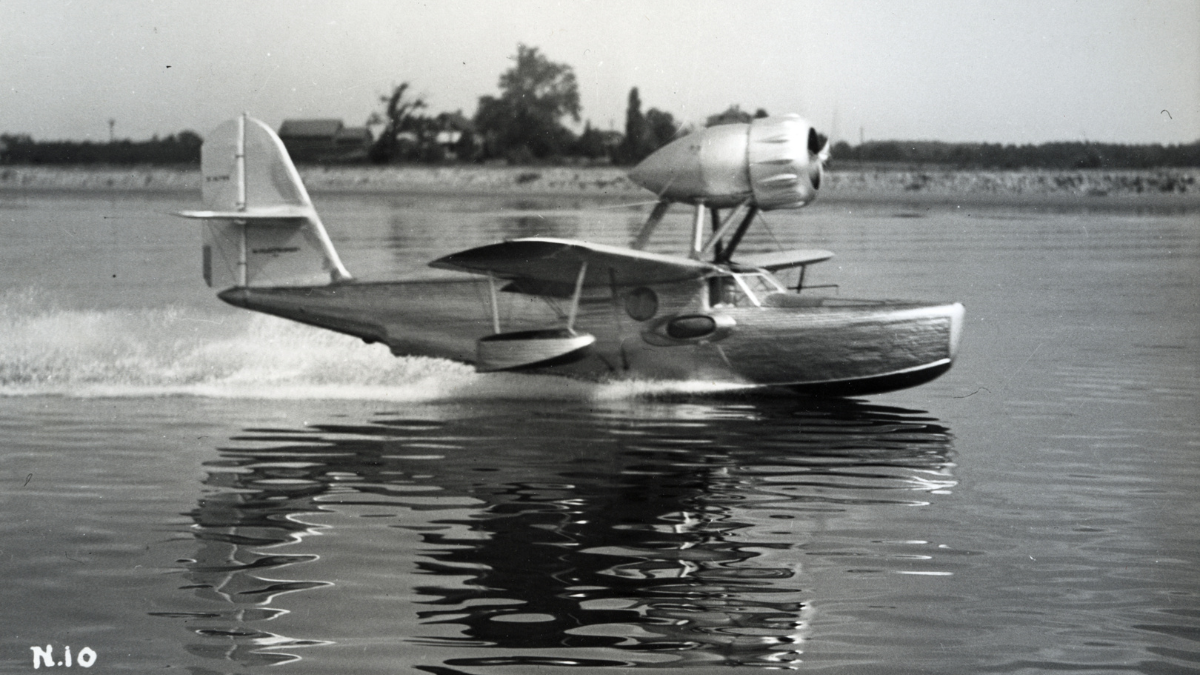
In 1925, the Huff-Daland Aero Company bought the former Harriman Shipyard, changed its name to Keystone Aviation, and joined the race to build a plane that could cross the Atlantic. The company built its own airfield along Green Lane outside of town. It was there that tragedy struck, when its promising Pathfinder plane, carrying a full ocean-crossing load of fuel, crashed at takeoff for its final test flight, killing the two US Navy pilots. Nevertheless, Keystone remained the major supplier of bi-wing bombers for the Army Air Corps. In 1930, the merged Keystone-Loening Company was purchased by Wright Corporation, which eventually made it part of Curtiss-Wright. In 1934, Fleetwings Inc. moved from Long Island to Bristol to begin building amphibious planes on the Keystone site. The Sea Bird was a technical success, but a financial failure, so only six were built and tested on the Delaware River. In 1943, Kaiser Industries bought Fleetwings and produced parts for war planes in a new factory alongside the Keystone airfield. By this time, there were three concrete runways, where they also built and tested training planes and an early version of drones. An interesting series of photographs from this period can be seen on Abandoned and Little-Known Airfields.
In 1960, Bristol’s aviation era entered the Space Age with Kaiser’s production of the launch canister for the Echo 1 balloon satellite. Shortly afterwards, the aeronautics facility was closed, but the 3M Corporation bought the airfield, renamed it 3M Airport and built a factory alongside it. One runway that ran directly toward the factory was closed, but light planes continued to use the rest of the field. When the Pennsylvania Turnpike was completed in the mid-1950s, the raised highway bridge at the end of one runway made landings and takeoffs risky, so it was changed to a taxiway.
The airport continued to function until it was closed in 1980, and remnants of two runways are now streets. The former Kaiser-Fleetwings factory from 1943 is still standing. In the fall of 2005, the former airport became a movie set, when the director M. Night Shyamalan filmed “Lady in the Water” on location there on an outdoor set that included the shell of a large apartment building and a real swimming pool.
Join the Conversation!