










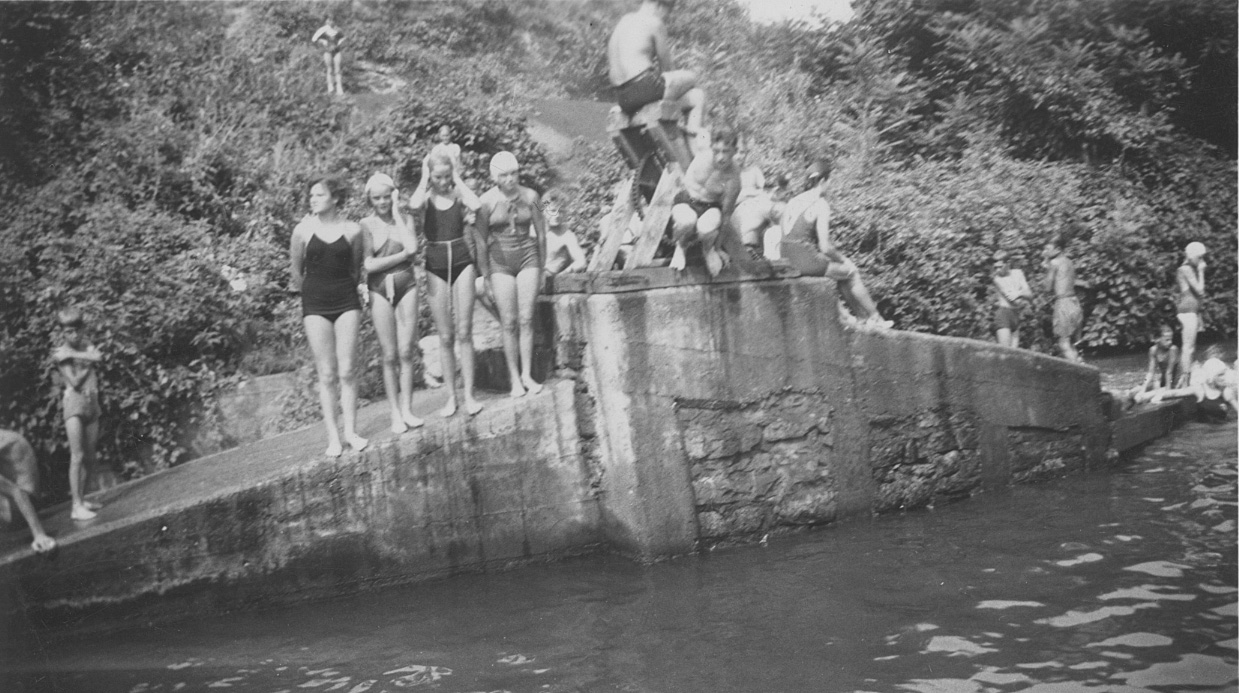
The ole swimmin’ hole ain’t what it used to be.
Written by Martha Capwell Fox, DLNHC Historian
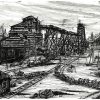
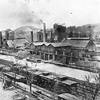
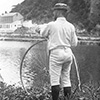
Back in the days when coal boats plied the canals, swimming was officially prohibited. But boatmen and locktenders usually tolerated swimmers as long as they didn’t interfere with their work. Offenders risked being poked with a fending pole, and in at least one case, of having the contents of a boat cabin chamber pot dumped on their heads.
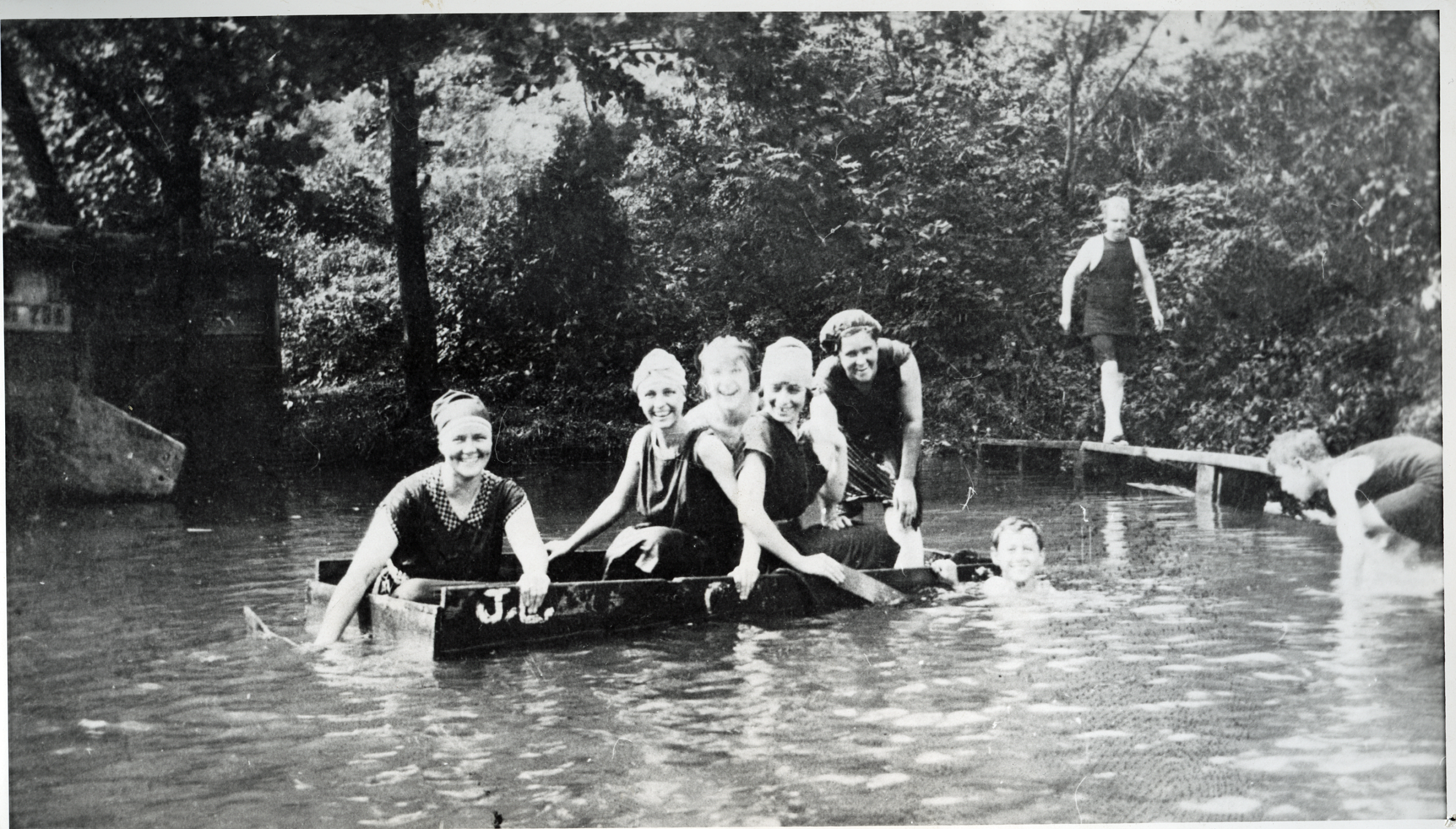
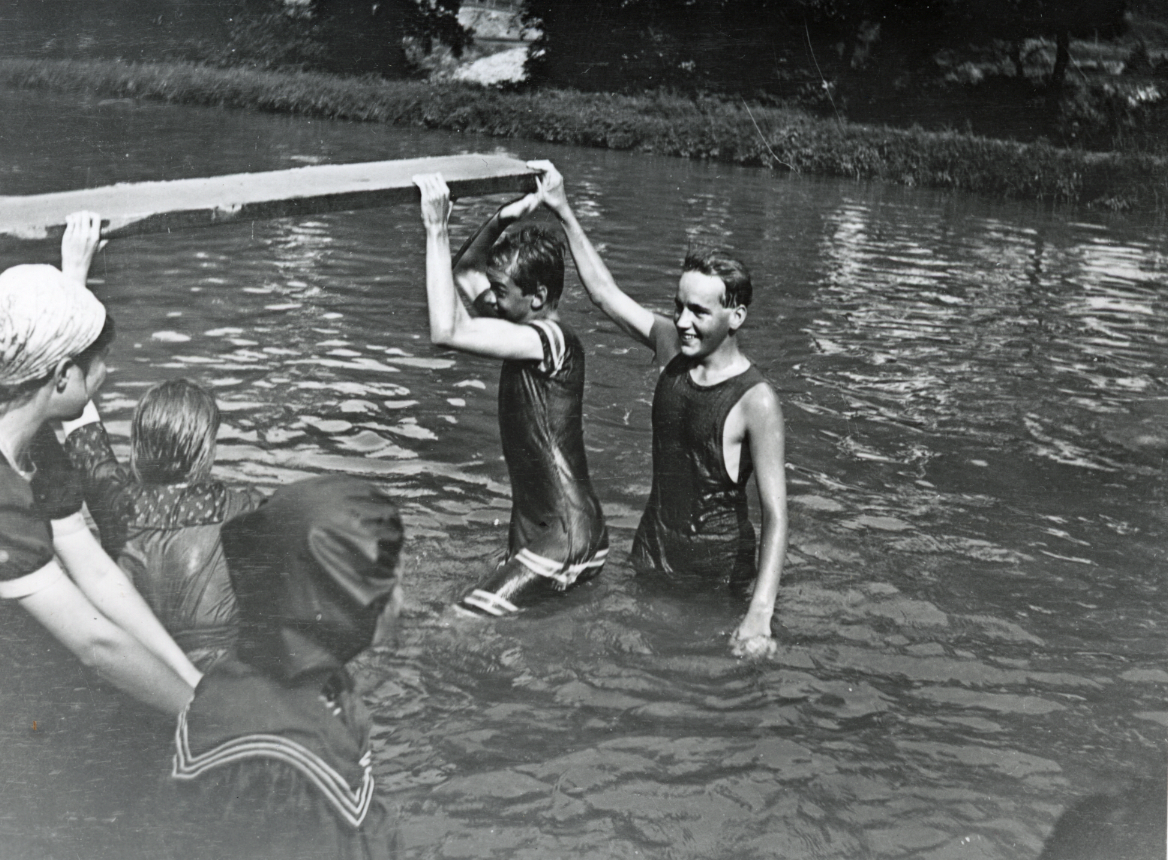
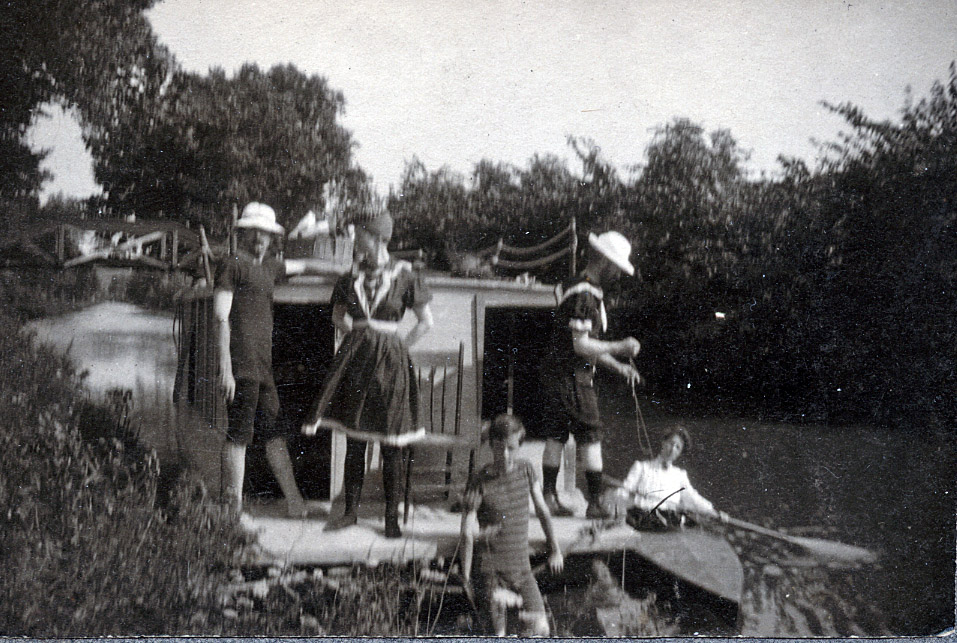
The real risk was probably the incredibly filthy water. The anthracite canals and local rivers were black with coal dirt and hardly better than open sewers in many places. But summer and swimming are synonymous, and these historic photos show the lure of a cooling swim was strong.
These days, most people seek out a pool, a splash park, or just a lawn sprinkler on a hot day. But there are folks who avoid the chemicals that keep pool water clean, or don’t enjoy swimming between walls and lane lines. For them, summer is the time for open natural water.
Where to Find Open Water in or Near the Corridor
Pennsylvania’s State Parks
Pennsylvania boasts 125 state parks, many of which have lakes with swimming beaches. Six of them are either in the Delaware & Lehigh National Heritage Corridor or adjacent counties and offer a variety of other outdoor activities like hiking, camping, boating, and fishing as well. The designated swimming areas do not have lifeguards; swimming outside those areas is forbidden.
- Rickett’s Glen (Luzerne)
- Promised Land Luzerne/Pike)
- Hickory Run (Carbon)
- Beltzville (Carbon)
- Tuscarora (Schuylkill)
- Locust Lake (Schuylkill)
Several state parks, including each one in Bucks County, have swimming pools; most charge an admission fee. Lake Nockamixon is the site of several open water swimming challenges (www.steelmanracing.come/open-water-classic) but otherwise swimming in the lake is forbidden. Open water training sessions are held weekly in the summer at Marsh Creek State Park in Chester County (www.midatlanticmultisport.com)
Entry to state parks is free, but they can be very crowded on hot summer days, so plan to arrive early. If you are heading to one in the middle of a summer day, especially on a weekend, it is a good idea to check the park’s website to make sure that it hasn’t reached capacity and won’t allow any more visitors. This is particularly important at Beltzville, which is very heavily visited. Alerts like this, and more info on the state parks is found at https://www.pa.gov/agencies/dcnr/recreation/where-to-go/state-parks.
Two More Lovely Lakes
The swimming beach at Blue Marsh National Recreation Area in Berks County is open year-round. Would-be polar bears are out of luck though, as the Army Corps of Engineers lowers the water level in the lake during the winter, leaving the swimming area high and dry. It has also been plagued by summer algae blooms, which make it unsafe for swimming, so check before you go.
Before the dam that created Carbon County’s Mauch Chunk Lake was built in the early 1970s, Mauch Chunk Creek regularly flooded the town of Mauch Chunk (now Jim Thorpe) as it raged under streets, homes, and buildings down to the Lehigh River. Now the county park surrounding the nearly 3-mile-long lake offers boating, canoeing, camping and hiking as well as a large sand beach and roped off swimming area with lifeguards, changing rooms and a concession stand. There is a daily admission charge of $3 for county resident adults and $2 for children over three, and $10 for adults and $7 for children who do not live in Carbon County. Admission is free for everyone over age 65.
Stroking on the Rivers
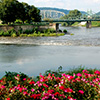
Swimming in the Lehigh and Delaware Rivers is generally not recommended, and illegal in many places, including Allentown and Lehigh Gorge. The river is unpredictable, going from shallow to very deep in short distances, with strong currents under the surface and a bottom covered in slippery rocks. Tubing is allowed on both rivers, and most guided river rides allow participants to take a dip in areas known to be safe.
Swimming and even wading are not allowed in any waterway in Allentown’s city limits. Swimming is prohibited in Monocacy and Saucon Creeks in Bethlehem, and in Bushkill Creek in Easton, though wading is allowed in Jacobsburg State Park. Swimming is also not allowed at Fish and Game Commission boat launches, such as the one at Rt. 33.
Delaware Water Gap National Recreation Area (NRA) has three swimming beaches, two on the Pennsylvania riverbank, and the third on the New Jersey side. There are fees to enter from April to October. Smithfield Beach is near the southern end of the park and Milford Beach at its northern end. Turtle Beach in New Jersey is seven miles upstream from the Exit 1 off Interstate 80. These swimming areas are roped off, but unguarded. If you take kids, know that floaties, inner tubes, rafts, and other flotation devices are not allowed.
Swimming is allowed in the river elsewhere in the NRA but not recommended. Strong currents, sharp drop-offs, and constantly changing river conditions make many areas unsafe for swimming.
Swim Safe
Swimming in open water is very different than in a pool. Currents, cold spots, wildlife, and slippery, rocky bottoms are all unpredictable in rivers and lakes. Many people overestimate their swimming skills, or lack them completely, which too often results in tragedy. Staying safe in lakes, rivers, and creeks is possible by taking some commonsense precautions.
- Never swim or wade alone
- Wear a properly fitting Coast Guard approved life jacket, especially if you don’t swim or exercise regularly. All children should wear one in any body of water. Water shoes are a good idea too.
- Look closely at the place you want to swim in. Are there rocks visible, and fast-moving water? Is there a place to get back on land if you can’t reach the place you entered the water?
- Get out of the water (or pool) if you can hear thunder and/or see lightning.
Got a favorite place to swim that is open to the public that we missed? Let us know in the comments.
Join the Conversation!