




Tatamy and the Walking Purchase of 1737
Written by Carter Drake, Museum Coordinator
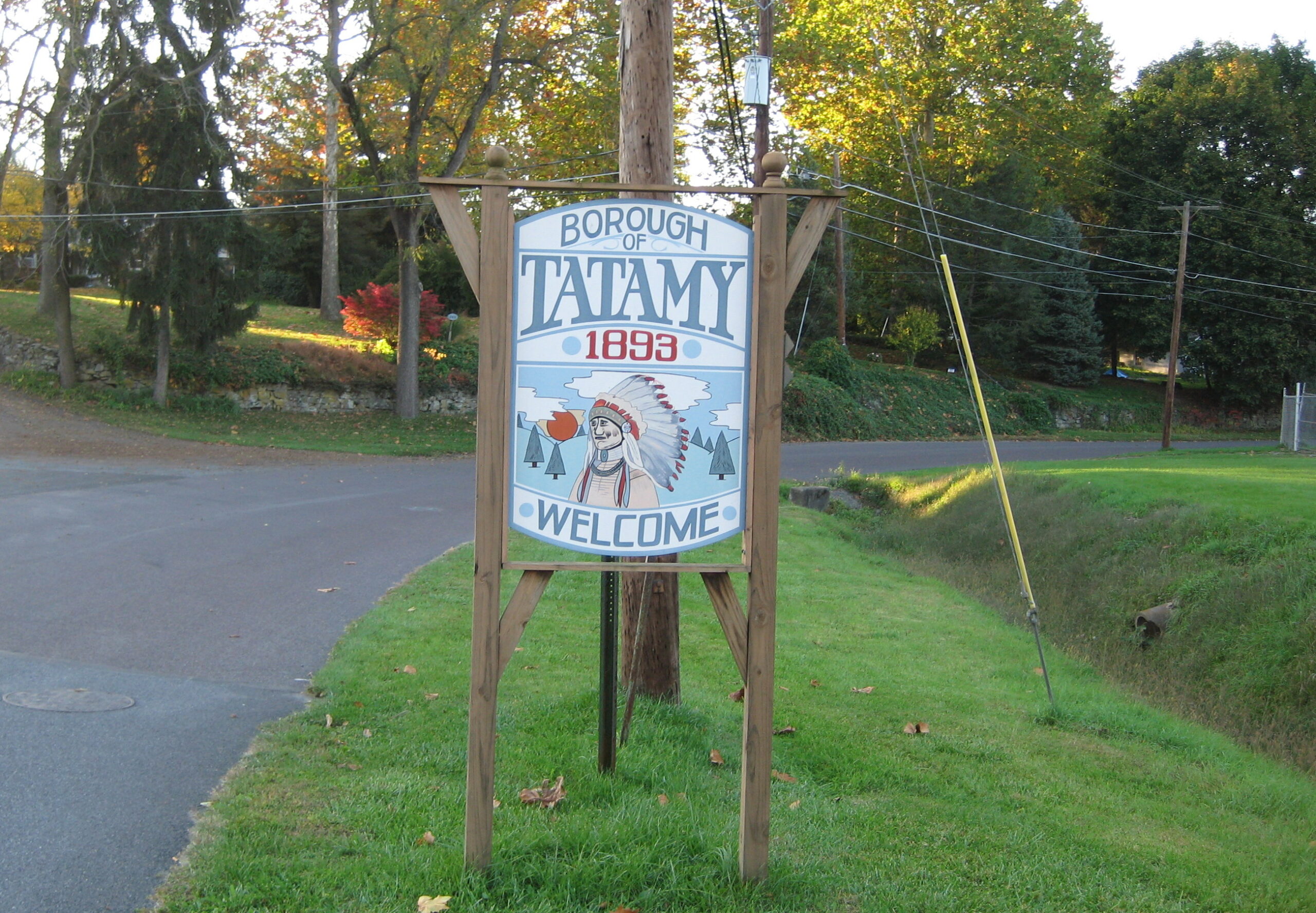
Tatamy was a Munsee Lenape who played a crucial role in early Pennsylvania history as an intermediary between Native and colonial worlds.
Tatamy left New Jersey for the Forks of the Delaware in the early 1730s. The Munsee had been forced from their original lands farther north due to increased competition for resources among Native groups, the spread of European diseases, and violent confrontations with Dutch and English settlers.
Although many Munsee Lenape migrated farther west into the Ohio and Susquehanna Valleys, Tatamy, among others, remained at the Forks of the Delaware. Tatamy spoke fluent English and used these skills to work as an emissary between Lenape communities and colonial authorities. Not only did he leverage his linguistic abilities to make a living within colonial society, but he also appears to have held sufficient standing among the Lenape to function at times as both a translator and a negotiator. The first substantial documentary record of Tatamy dates to 1737.
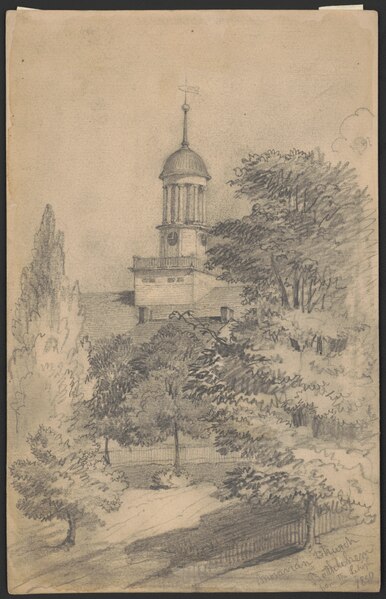
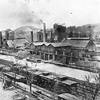
Moravian Church, Bethlehem, from the Lehigh, 1850. Click to enlarge photo.
In late December of that year, he was granted 315 acres in the Lehigh Valley. Located just north of Bethlehem, the tract lay near land purchased by the Moravians and later known as Nazareth. The grant was made by Thomas, Richard, and John Penn; sons of William Penn and proprietaries of the colony, in consideration of their “love and affection for Tatamy,” suggesting that he had already established a relationship with Pennsylvania’s colonial leadership.
Tatamy was present at the infamous Walking Purchase negotiations of 1737 in Easton. At these talks, Pennsylvania authorities misled Lenape representatives into believing that a land agreement from 1687 had remained incomplete. Colonial officials claimed that the earlier treaty entitled them to a tract of land extending westward as far as a man could walk in a day and a half from Wrightstown. It is likely that this supposed 1686 agreement was never ratified, never formally recorded, or according to some scholars, an outright forgery.
Colonial representatives employed multiple forms of deception. The Lenape were shown a misleading map that labeled the distant Lehigh River as the much closer Tohickon Creek in present-day Bucks County. In addition, rather than a steady paced walk through the wilderness, Pennsylvania officials hired three of the fastest runners in the colony to sprint northward along a prepared route. The ‘walkers’ reached an area near modern-day Jim Thorpe, covering roughly seventy miles in the allotted time. As a result, the colony of Pennsylvania claimed more than 1.2 million acres of Lenape land.
Unsurprisingly, the Walking Purchase intensified pressure on Lenape communities in the region, who were again forced from their homeland. Tatamy later recalled that “People came fast to settle the Land in the Forks, so that in a short time it was full of Settlement & the Indians were oblig’d to remove farther back.” When Tatamy used the word “oblig’d,” he was describing coercion rather than voluntary migration. Differing concepts of land ownership, combined with the rapid influx of settlers, placed severe strain on already limited Lenape resources.
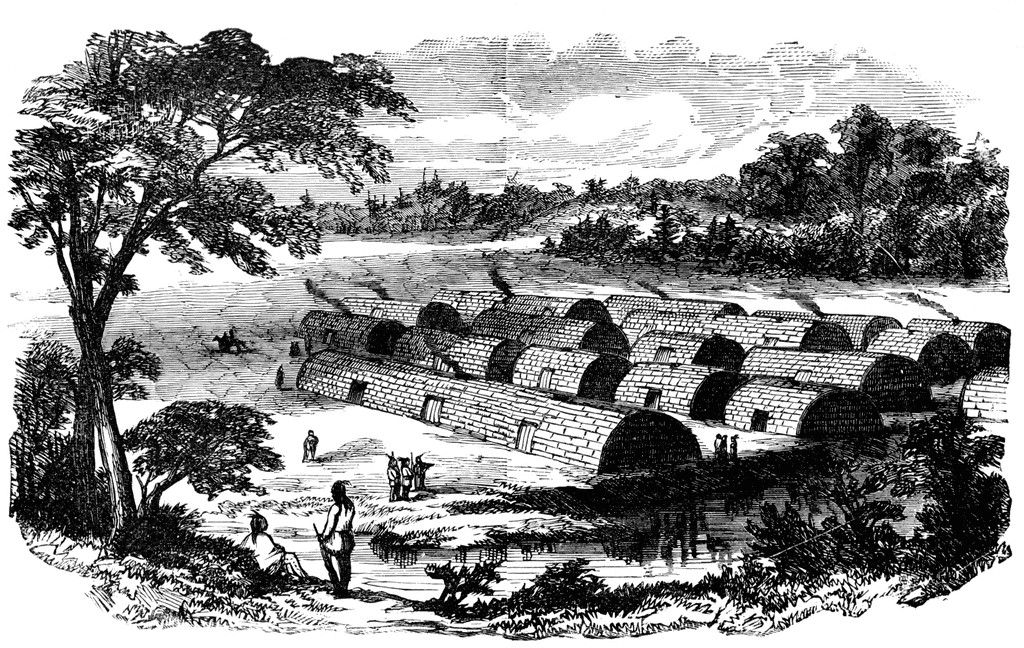
Depiction of a Lenape Settlement
In 1741, Tatamy was invited to a conference in Easton involving representatives of the Iroquois Confederacy to discuss the purchase of lands west of the Susquehanna River. Relations between the 6 Nations and the Lenape had long been shaped by conflict over the fur trade during the Beaver Wars. By this point, the Iroquois had emerged as the dominant power and demanded that the Lenape vacate the Forks of the Delaware. Unable to resist, many Lenape dispersed westward. In an effort to avoid removal and to secure legal protection for his property, Tatamy formally purchased the land previously granted to him by the Penn proprietors in 1737, making him the first known Native American to complete a formal land purchase in Pennsylvania.
Tatamy continued to inhabit the Forks of the Delaware through the 1740s. During this period, he worked as a translator for David Brainerd, a Presbyterian missionary based in Bethlehem. Tatamy was the first Native American converted by Brainerd, being baptized in 1745 and adopting the name “Moses.” Brainerd soon moved on in his missionary efforts and died in 1747; Tatamy remained in the Lehigh Valley, continuing to serve as an interpreter and cultural intermediary. Colonial officials increasingly recognized him as a valuable agent capable of navigating both Native and colonial worlds. By this time, he was likely among the relatively few Munsee Lenape still residing at the Forks of the Delaware.
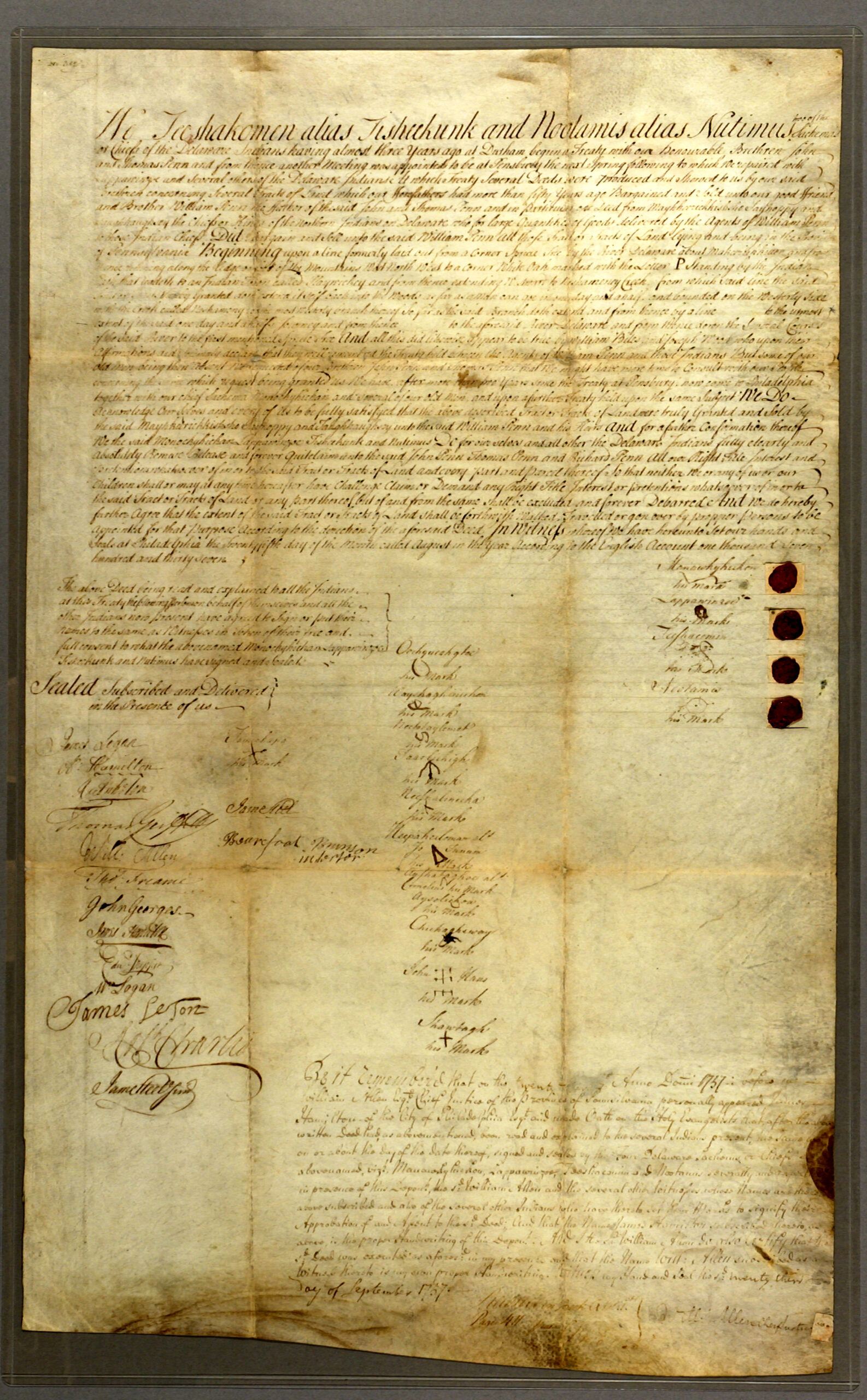
The Walking Purchase of 1737. Click to enlarge photo.
The Walking Purchase and its aftermath contributed to escalating tensions between Native communities and white settlers. In the years that followed, the region experienced recurring, localized episodes of violence. Exaggerated reports of French aligned Native attacks, along with violent reprisals against perceived Indigenous threats, heightened fear and mistrust on both sides. By 1754, colonial authorities recognized that strained relations with neighboring tribes posed a danger to Pennsylvanians. The intensifying Franco-British rivalry over the Ohio Valley made war increasingly likely, and Pennsylvania’s frontier settlements were vulnerable to French-supported war parties. Hostilities would formally erupt in the spring of 1754, following an unauthorized attack on French troops by a young Virginian officer named George Washington.
Despite likely retaining the same legal protections for his property as white settlers, Tatamy left the Forks of the Delaware for the relative safety of New Jersey in 1755. Not fully embraced by colonial society and increasingly removed from Lenape communal life, he likely concluded that remaining on the frontier during wartime posed too great a risk to his family.
In 1756, Pennsylvania authorities initiated a new series of negotiations aimed at securing neutrality from the Iroquois and Lenape. Tatamy again traveled to Easton, serving as a translator on behalf of the Delaware people. He attended the 1756 council and returned the following year for additional negotiations.
One of these journeys was marked by personal tragedy. While traveling through the area of modern-day Catasauqua with his son William en route to Easton, William was shot in the leg by a frightened settler, often identified in later accounts as a young Irish boy. William was taken to Bethlehem for medical treatment, where he died within a month of the shooting. He fell victim to the climate of fear and suspicion that Tatamy himself was attempting to mitigate through diplomacy. A Christian burial was held on the outskirts of Bethlehem, reportedly attended by nearly two hundred Native mourners. Already struggling with depression and alcohol use, the loss of his son further deepened Tatamy’s decline.
Despite this loss, Tatamy continued on to Easton, where he again served as a translator for the Delaware at the Treaty of Easton. There, British authorities secured assurances of Lenape and Iroquois neutrality in their war against France. In the years that followed, Tatamy worked at the request of the governor of New Jersey to mediate disputes involving Native communities. He later traveled to Ohio as an official British translator, receiving in exchange a promise that his daughter, Jemima, would receive a Quaker education.
By 1760, Tatamy was in his mid-sixties and in poor health. Upon returning from Ohio, he suffered from what contemporaries described as “flux,” likely dysentery. Aware of his declining condition, Tatamy wrote to his friend Israel Pemberton, predicting that he had little time left and appointed Pemberton to execute his will. He died only a few months later.
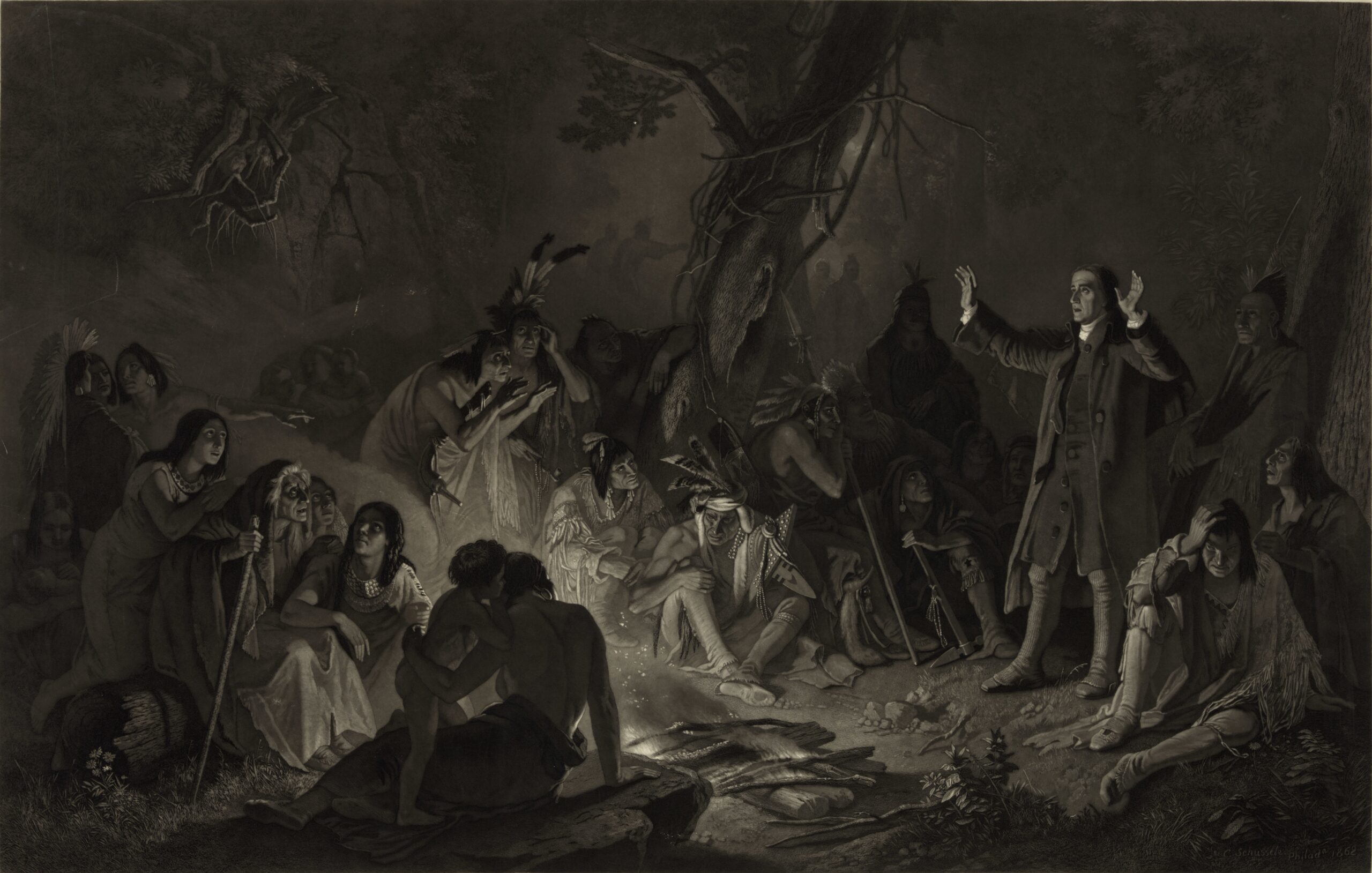
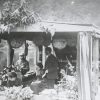
Zeisberger preaching to the Indians
Tatamy was survived by his son Nicholas and his daughter Jemima. Nicholas reappears in the documentary record nine years after his father’s death, successfully petitioning the Pennsylvania government in 1769 for 200 acres of land in recognition of Tatamy’s service. Census records confirm that Nicholas remained on the property in both 1790 and 1800. Jemima received the Quaker education promised to her father, though she disappears from the historical record shortly thereafter.
Moses Tatamy’s life reveals the precarious space afforded to Native intermediaries in colonial Pennsylvania. As a translator, negotiator, landholder, and Christian convert, Tatamy occupied a position few Indigenous people could claim. Yet that position was never stable. He moved between Native and colonial worlds without fully belonging to either, his value defined by utility. Tatamy’s career demonstrates the limits of mediation in an imperial system built on dispossession. His presence at treaties did not prevent deception, his loyalty did not prevent violence, his Christianity did not spare his son from becoming a casualty of colonial fear. The killing of William Tatamy stands as a stark reminder that even those invested in peace could not escape the anxieties of the frontier. His life underscores a central truth of early American history: that cultural fluency and good faith could prevent conflict but not overcome a colonial order unwilling to recognize Native people as equals. Seen in this light, Tatamy should be understood not as a figure who bridged two worlds, but as one who exposes the boundaries that mediation could not overcome. His life demonstrates that intermediaries were essential to colonial governance yet ultimately constrained by a system that relied on Native cooperation while denying them real sovereignty.
Resources
Brinton, Daniel G. 1885. The Lenape and Their Legends: With the Complete Text and Symbols of the Walam Olum, a New Translation, and an Inquiry into Its Authenticity. Philadelphia: D. G. Brinton.
Donehoo, George P. 1998. A History of the Indian Villages and Place Names in Pennsylvania. Lewisburg, PA: Wennawoods Publishing. Originally published 1928.
Harper, Steven C. 1970. Promised Land: Penn’s Holy Experiment, the Walking Purchase, and the Dispossession of Delawares, 1600–1763. Bethlehem, PA: Lehigh University Press.
Harper, Steven C. 2010. “Making History: Documenting the 1737 Walking Purchase.” Pennsylvania History: A Journal of Mid-Atlantic Studies 77 (2): 217–33. https://doi.org/10.5325/pennhistory.77.2.0217 .
Hunter, William A. 1996. “Moses (Tunda) Tatamy, Delaware Indian Diplomat.” In Northeastern Indian Lives, 1632–1816, edited by Robert S. Grumet, 258–72. Amherst: University of Massachusetts Press.
Merrell, James Hart. 2000. Into the American Woods: Negotiators on the Pennsylvania Frontier. New York: W. W. Norton.
Parsons, William, John Jones, Richard Peters, and Thomas Barnes. 1914. “Some of the Expenses in the Founding of Easton, Penna.” The Pennsylvania Magazine of History and Biography 38 (1): 110–14. http://www.jstor.org/stable/20086157 .
Pointer, Richard W. 1994. “‘Poor Indians’ and the ‘Poor in Spirit’: The Indian Impact on David Brainerd.” The New England Quarterly 67 (3): 403–26. https://doi.org/10.2307/366145 .
Walling, Richard S. 2012. Locating a Lenape Landscape: Tatamy’s Swamp, West Windsor Township, Mercer County, New Jersey. North Brunswick, NJ: Communipaw Consulting.
Join the Conversation!