




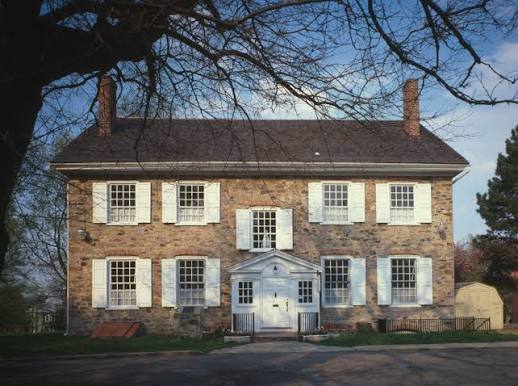
Summerseat, Washington’s headquarters in December 1776
Homes of Pennsylvania’s Declaration Signers
Written by Martha Capwell Fox, DLNHC Historian
Of the hundreds of historic 18th century houses and buildings in Pennsylvania, very few remain that were homes to the nine Pennsylvanians who signed the Declaration of Independence.
A log-and-stone cabin that dates to 1699 stands in Morton Homestead State Park in Prospect Park, Delaware County. Signer John Morton’s Finnish great grandfather established the Homestead in 1654. The cabin may have been Morton’s birthplace in 1725.
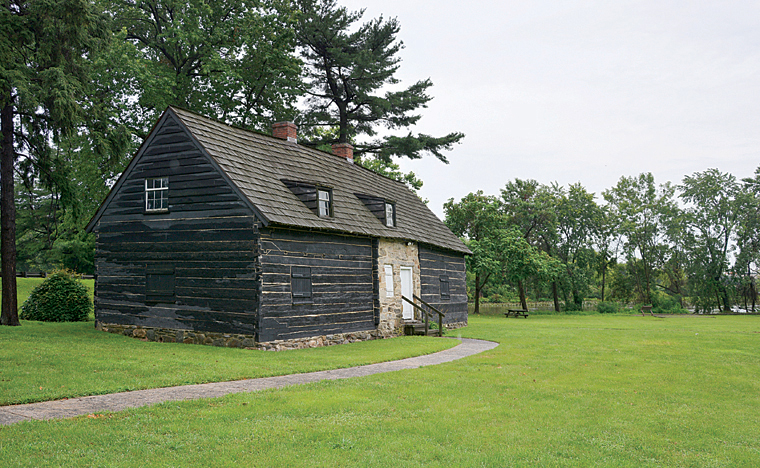
The Morton Homestead
Summerseat, built in 1765 in Morrisville, Bucks County, is the only building in the US that was owned, at separate times, by two signers, Robert Morris and George Clymer. Both used it only as a summer home. Summerseat was Washington’s headquarters in December 1776 where he planned the daring Christmas crossing of the Delaware River.
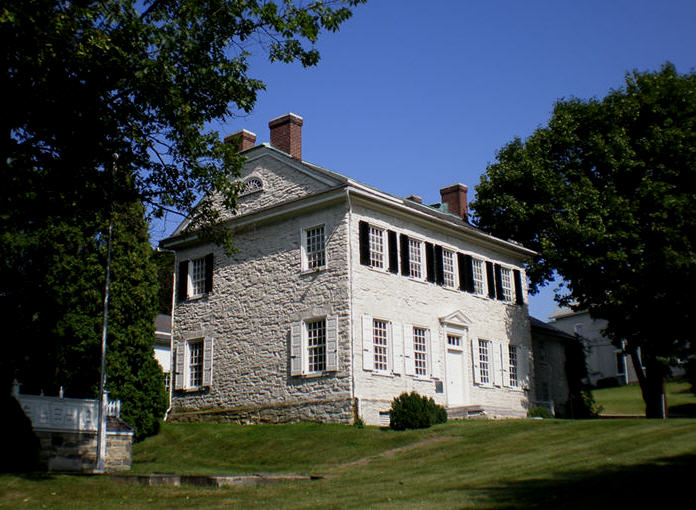
The George Taylor House
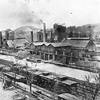
Signer George Taylor lived in several places that can be visited, or at least seen. Taylor, an ironmaster, likely lived in the ironmaster’s house that still stands at Warwick Furnace Farms in Chester County. In 1755, he leased Durham Furnace in Bucks County and lived with his wife and son in the manor house there until 1761. That house, now a private residence, was damaged by fire and rebuilt in 1780. In 1762, Taylor bought and moved into the Easton House, an inn and tavern now known as Bachmann Publick House. In 1767 he bought over 300 acres of land and built a large Georgian-style house overlooking the Lehigh River in what is now Catasauqua. Ann Taylor died shortly after they moved in; Taylor sold the property in 1776.
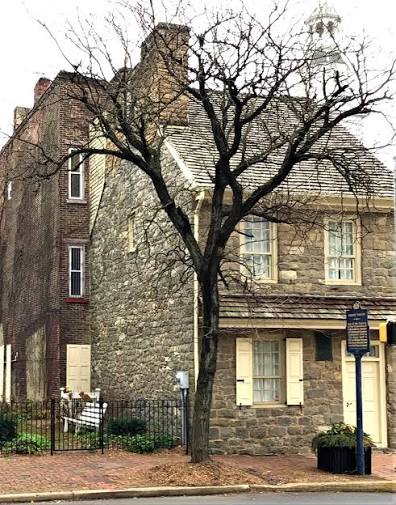
The Parsons-Taylor House
Taylor returned to Durham Furnace in 1774, where he produced cannon balls and ammunition for the Continental Army. After his Durham lease ended in 1779, Taylor moved to Greenwich Township in New Jersey where he briefly operated a furnace. In 1780, in financial difficulties and caring for a large family of children and grandchildren, he moved to the Parsons (now the Parsons-Taylor House), the oldest house in Easton, where he died in February, 1781.
Join the Conversation!