















Bethlehem Steel and the Cyclotron
Bethlehem Steel Corporation was once a king of manufacturing, at its peak the second-largest steel company in the United States. Most of the structures synonymous with Bethlehem Steel are massive, like the Empire State Building and Golden Gate Bridge. They made the building blocks that made America, but at one time, Bethlehem Steel was also fabricating materials used to ‘smash’ some of the smallest building blocks: the building blocks of matter!
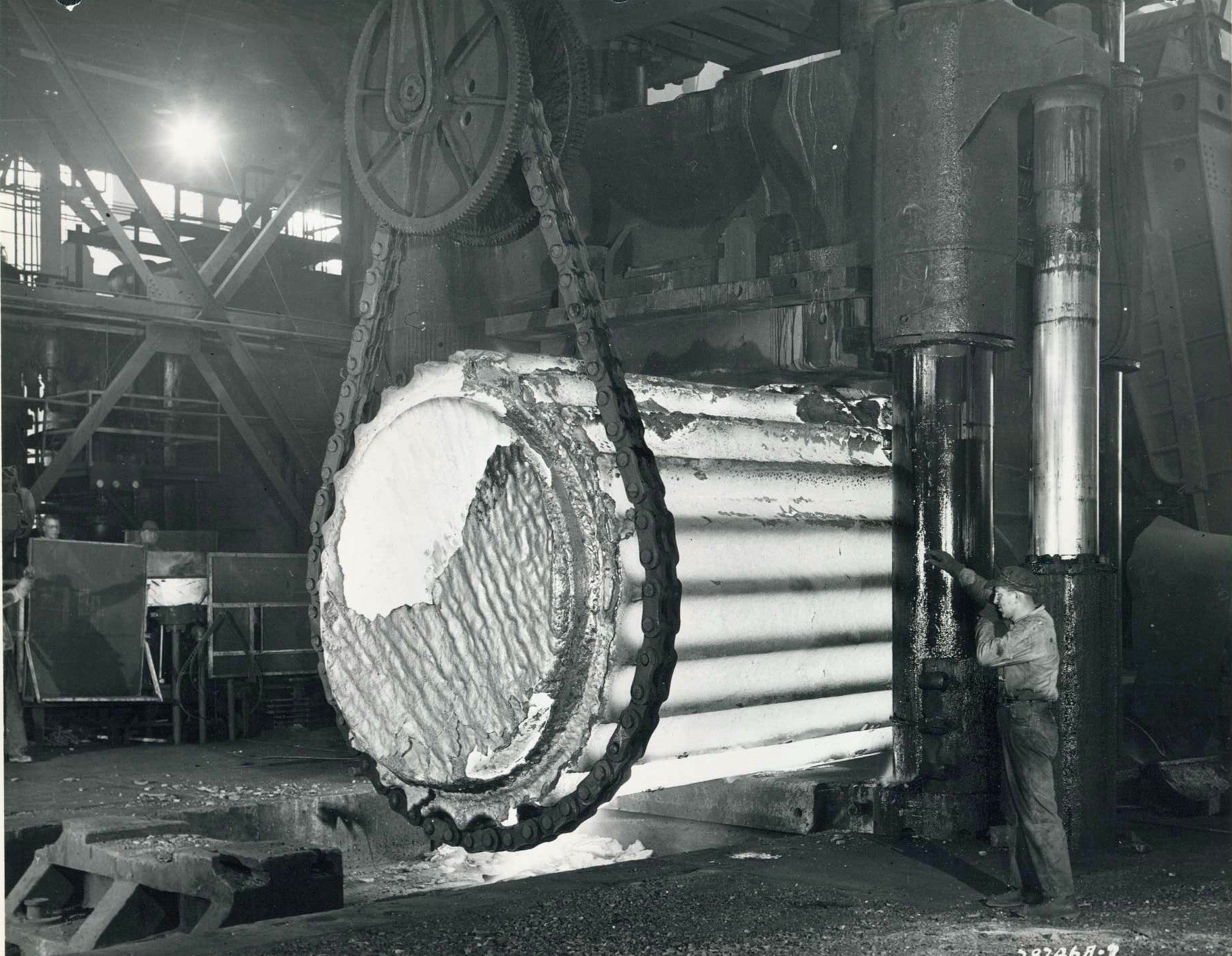
In a CD labeled Bethlehem Steel Photos, there is a series of images of large projects at the Steel. There are 517 images on this CD, and unfortunately, they have unhelpful names such as color1.jpg and 3336a-1.jpg. Since we’re working on cataloging our CD and DVD Reference Collections, we need to write good descriptions of what’s on each disc. That means going through each CD, image by image and asking ourselves “What are the images of? Are they high or low quality? Are they relevant to what we collect?”
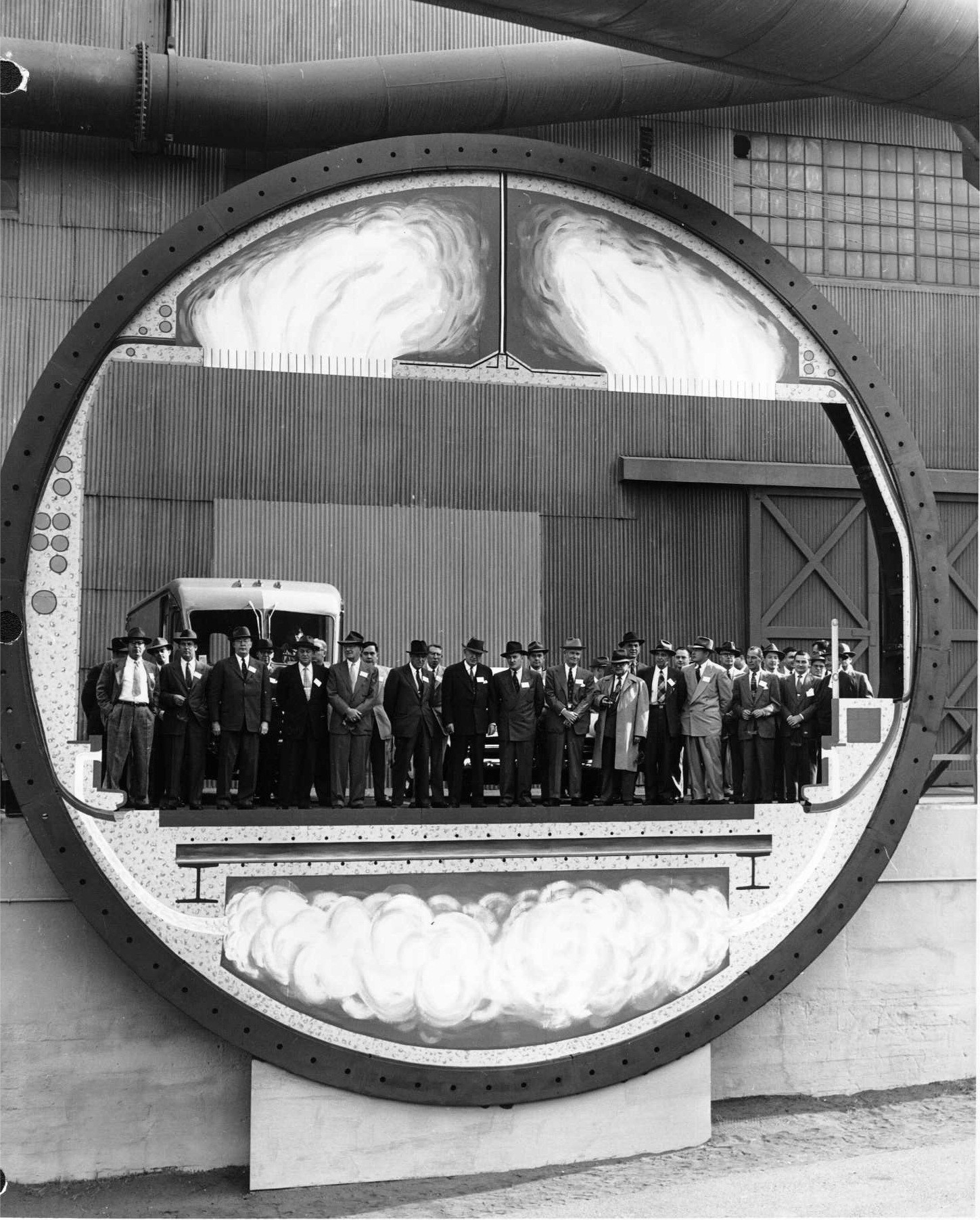
This CD had images and documents from Bethlehem Steel in the 1940s-70s. There are red-hot steel ingots being hammered into shape, finished pieces and products, and promotional shots of employees. For example, there were several images of a cross section of the Lincoln Tunnel. There were also a few images of a scaled-down model of that cross section that was built as a display for the Smithsonian Institute.
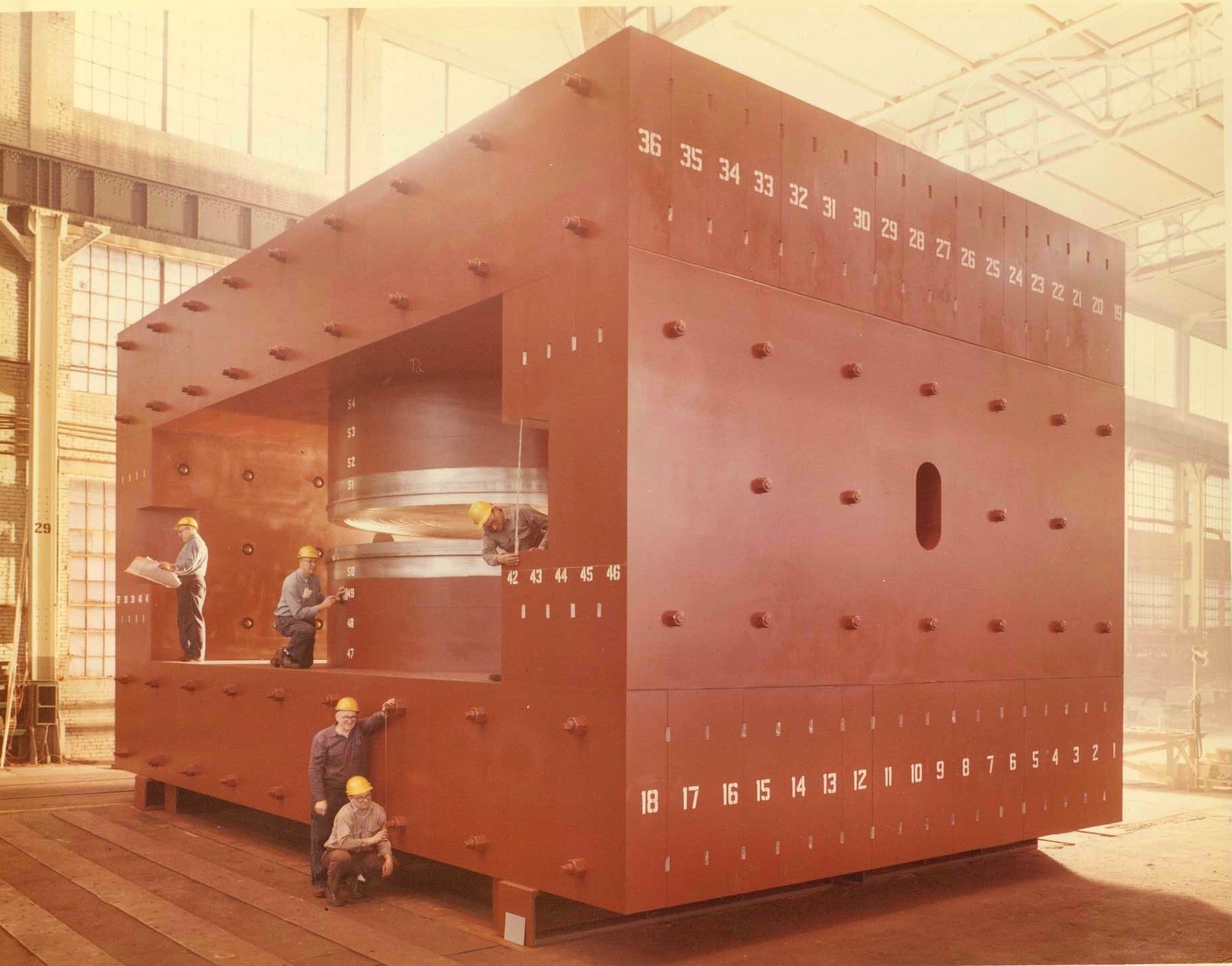
Towards the end of this CD, we came across newspaper articles, letters, and work notes about cyclotrons. In 1946 and 47, Bethlehem Steel was working on fabricating frames and magnets for cyclotrons, particle accelerators that use electromagnetic fields to speed up particles into a beam of energy. Most of the document scans on this CD focused on the cyclotron being built for Columbia University.
The earliest scan is from December 1946, when Bethlehem Steel and Columbia University met to discuss installation limitations, like building height and the maneuverability of Ardsley Avenue (the road to Nevis Lab, where the cyclotron was installed). Columbia stated that pure iron was the ideal magnet material and set upper limits at fractions of a percent (between 0.04% and 0.50% max) for impurities of Carbon, Silicon, Manganese, Phosphorus, Sulphur, Aluminum, and Copper.
The two organizations were working towards a tight delivery schedule. The goal, if the contract was awarded to Bethlehem Steel by January 1, 1947, was to have installation begin on April 1, 1947, and finish on May 30 of the same year. However, a late January 1947 document showed a revised delivery schedule with erection beginning May 1 and ending June 15, and letters from July 1947 indicated a delivery date in August or later.
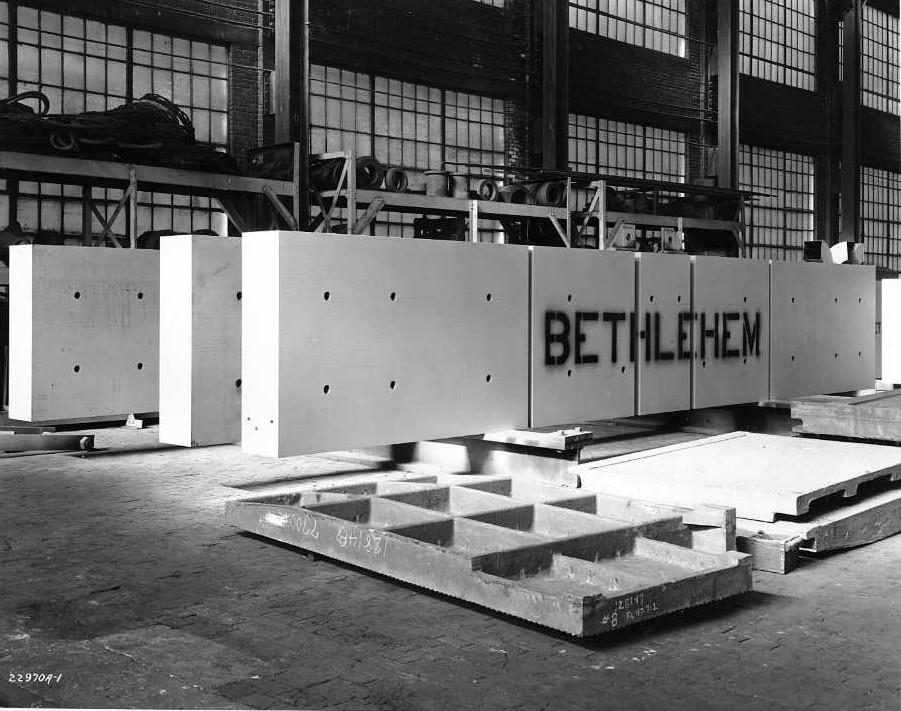
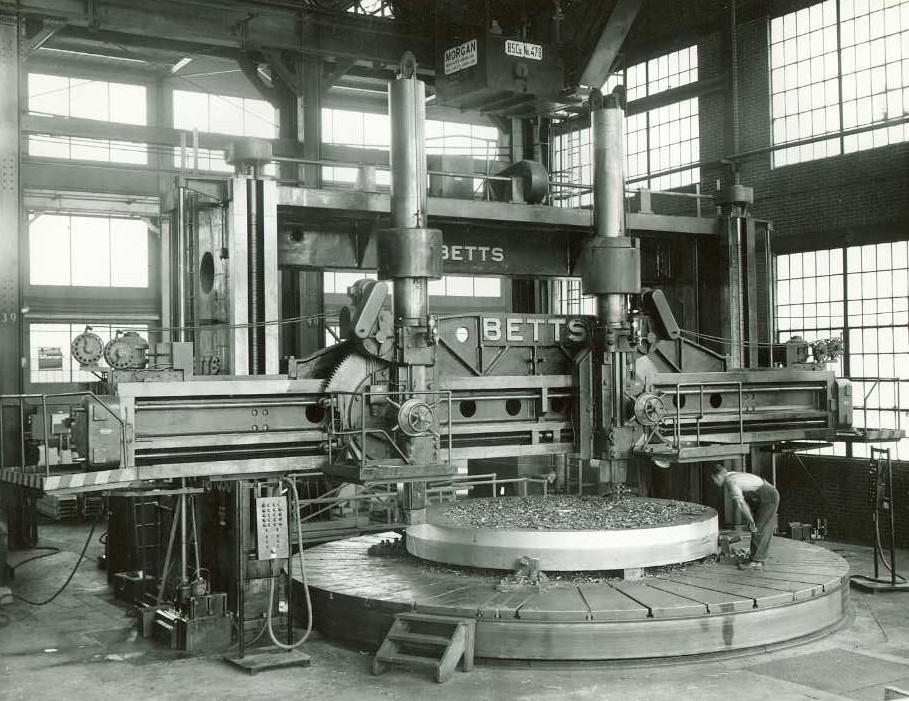
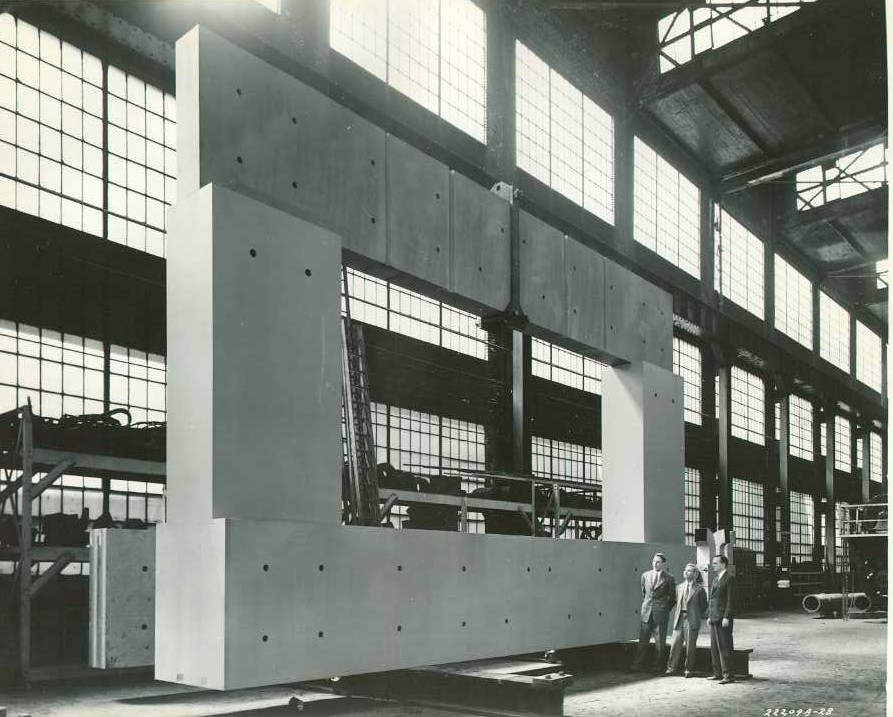
The final fabrications from Bethlehem included 38 machined blocks of steel weighing 60 tons each. Most of these pieces were 33 feet long, 1 ½ feet thick, and 5 ½ feet wide. They were drilled with holes and later bolted together, making up the frame for the cyclotron. Bethlehem also fabricated the pieces for the magnet and coil tank. The magnet was 170 inches across and weighed over 2,000 tons. To forge the magnets for larger cyclotrons, Bethlehem Steel used some of the largest ingots ever made at over 465,000 pounds. They expected to need 25 gondola cars and 2 well cars to ship the pieces by train and then wartime tank carriers to transport them to Nevis Laboratories.
The Columbia University cyclotron, also called a ‘synchro-cyclotron’, was built in cooperation with the Office of Naval Research specifically for nuclear research, not bomb-making. Cyclotrons allow scientists to accelerate particles to very high energies and then aim them at a target. The debris left over from the smashed atoms is then studied to learn about subatomic particles and how they work. In 1948, the cyclotron at Columbia University was featured in Look Magazine, photographed by 20-year-old Stanley Kubrick.
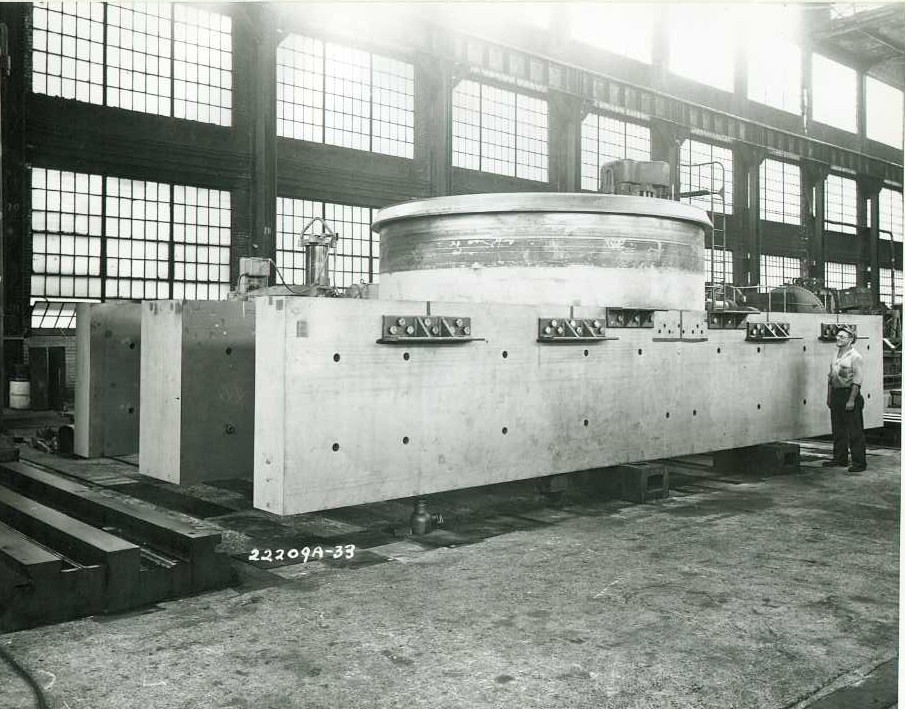
Bethlehem Steel was involved in cyclotron fabrication for many organizations, including Carnegie Tech, the University of Chicago (AKA Fermi’s Magnet), Brookhaven National Laboratory (AKA a Cosmotron), Iowa State University, and Harvard University.





Join the Conversation!