
















What Can a Three-Inch Toy Car Tell Us About Pennsylvania’s Industrial Past?
Written by Carolynn Birilli, DLNHC Museum Education Manager
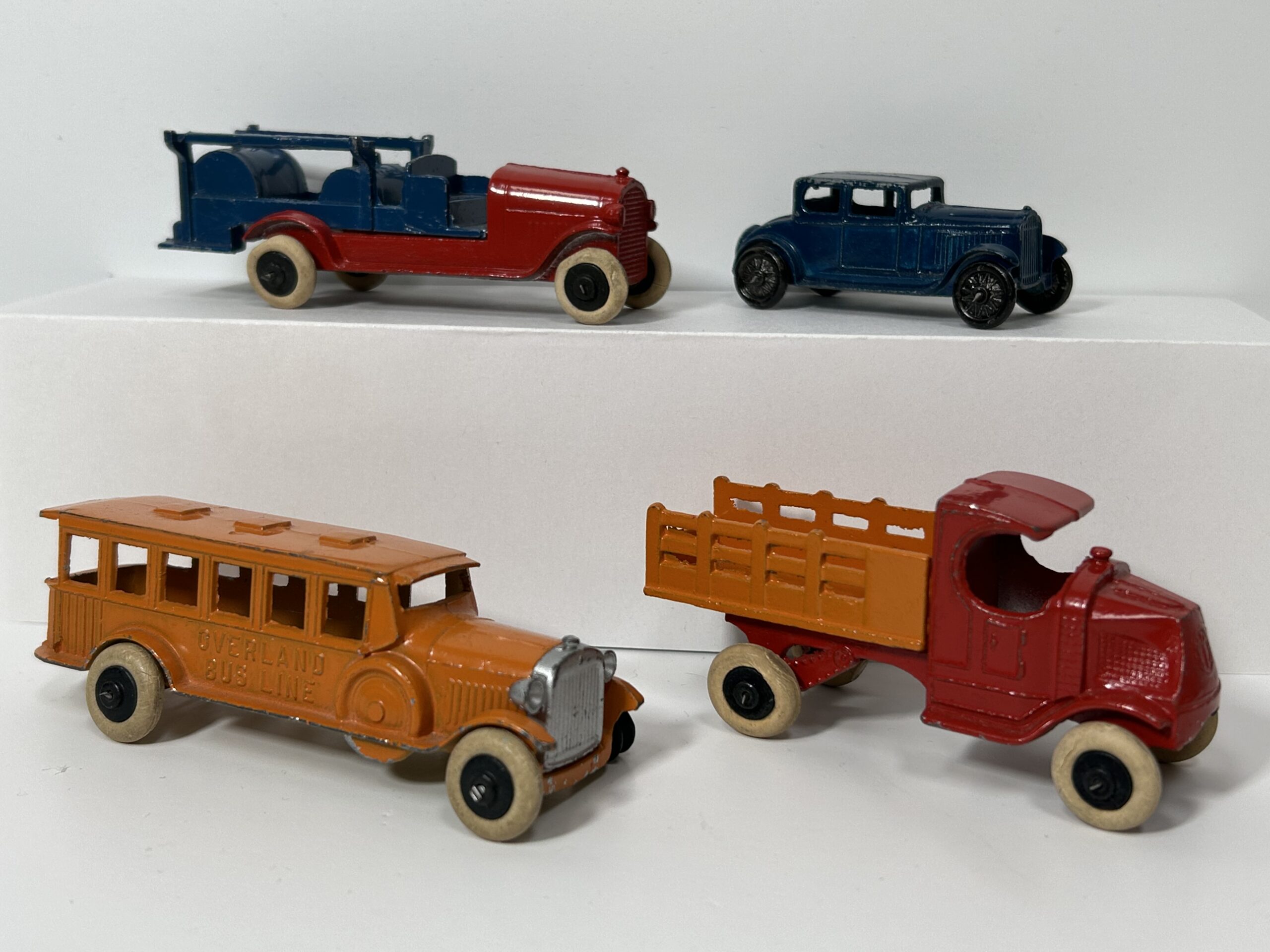
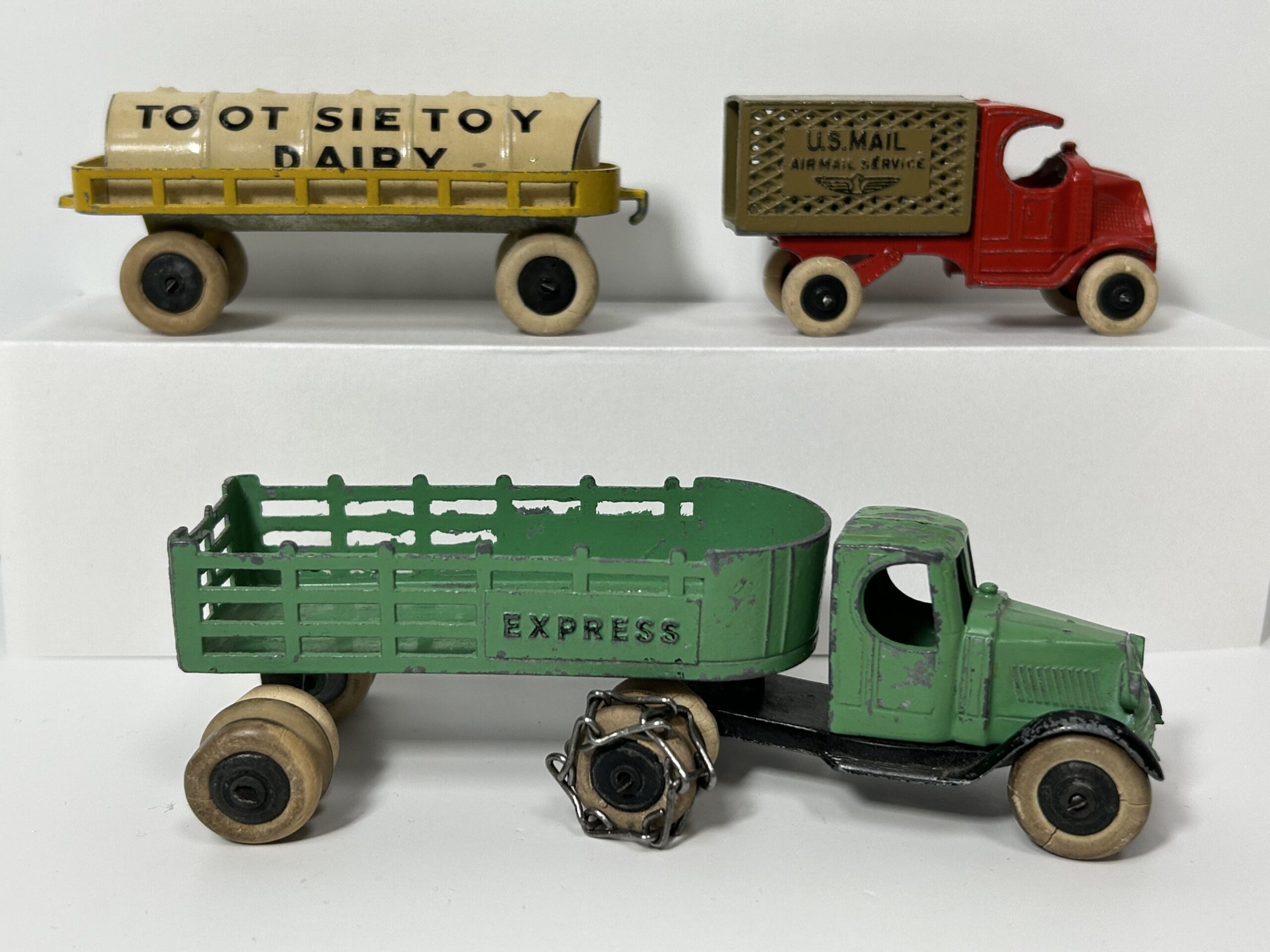
Inside the National Canal Museum’s archives is a box of unassuming children’s toys, including die-cast vehicles from the 1930s. Pick up one of these small cars and it seems wonderfully simple: a molded-metal body, perhaps brightly painted, with tiny rubber tires and just enough detail to suggest a sedan, truck, or racing car. Trace that metal back to its source, however, and this toy opens onto a much larger industrial story.
From Chicago toy factories to experiments in zinc alloys, the story travels eastward to Palmerton, Pennsylvania, where the New Jersey Zinc Company operated one of the nation’s great zinc-processing complexes. From Palmerton the story reaches farther back, into the early zinc mines of the Saucon Valley, the transportation networks of the Lehigh Valley, and the coal and industrial infrastructure that made large-scale metal production possible.
And then the story takes another turn. Zinc alloys helped manufacturers move away from some older lead-heavy toy castings, but the production of zinc itself carried hazards of its own. The same industrial processes that helped put inexpensive metal toys into American children’s hands also exposed workers, communities, waterways, and landscapes to pollution whose effects remain visible today.
A three-inch toy car, in other words, can contain an unexpectedly large piece of the Delaware & Lehigh Corridor’s industrial history.
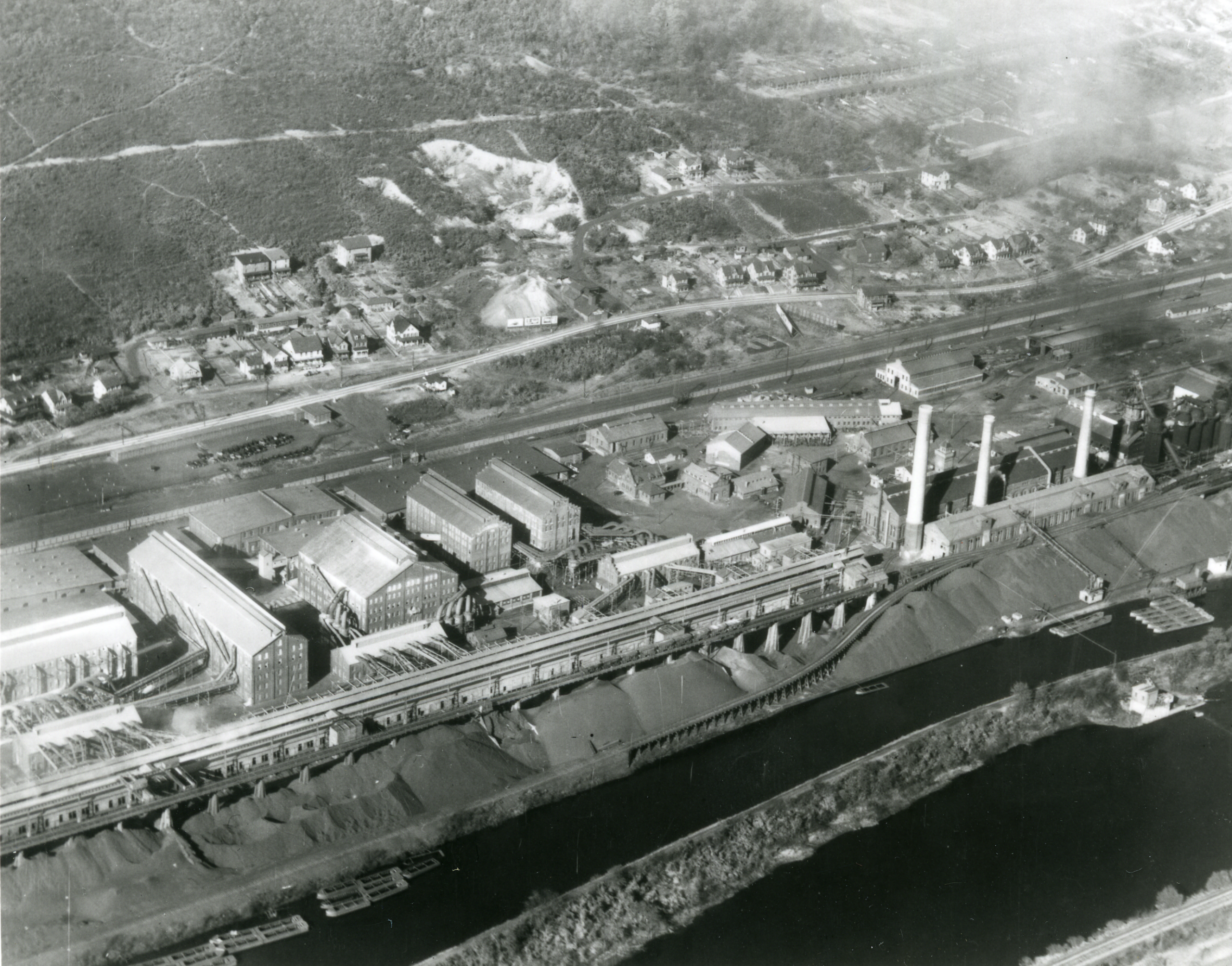
Aerial view of a portion of the New Jersey Zinc Company
Before Palmerton: Zinc Comes to the Lehigh Valley
The American zinc story has deep roots in the Lehigh Valley.
Zinc was discovered in the Saucon Creek Valley in 1845, when farmer Jacob Ueberroth found unfamiliar minerals on his land[1]. Bethlehem chemist and first Professor of Geology and Analytical Chemistry at Lehigh University, William Theodore Roepper, identified the ore as calamine[2].
In the 1850s Samuel Wetherill developed an improved American method for producing zinc oxide and refining zinc ores. Wetherill helped establish the Pennsylvania and Lehigh Zinc Company and built a zinc works along the south bank of the Lehigh River opposite Bethlehem. A community grew around the operation, and zinc became another component of the region’s rapidly expanding industrial economy.
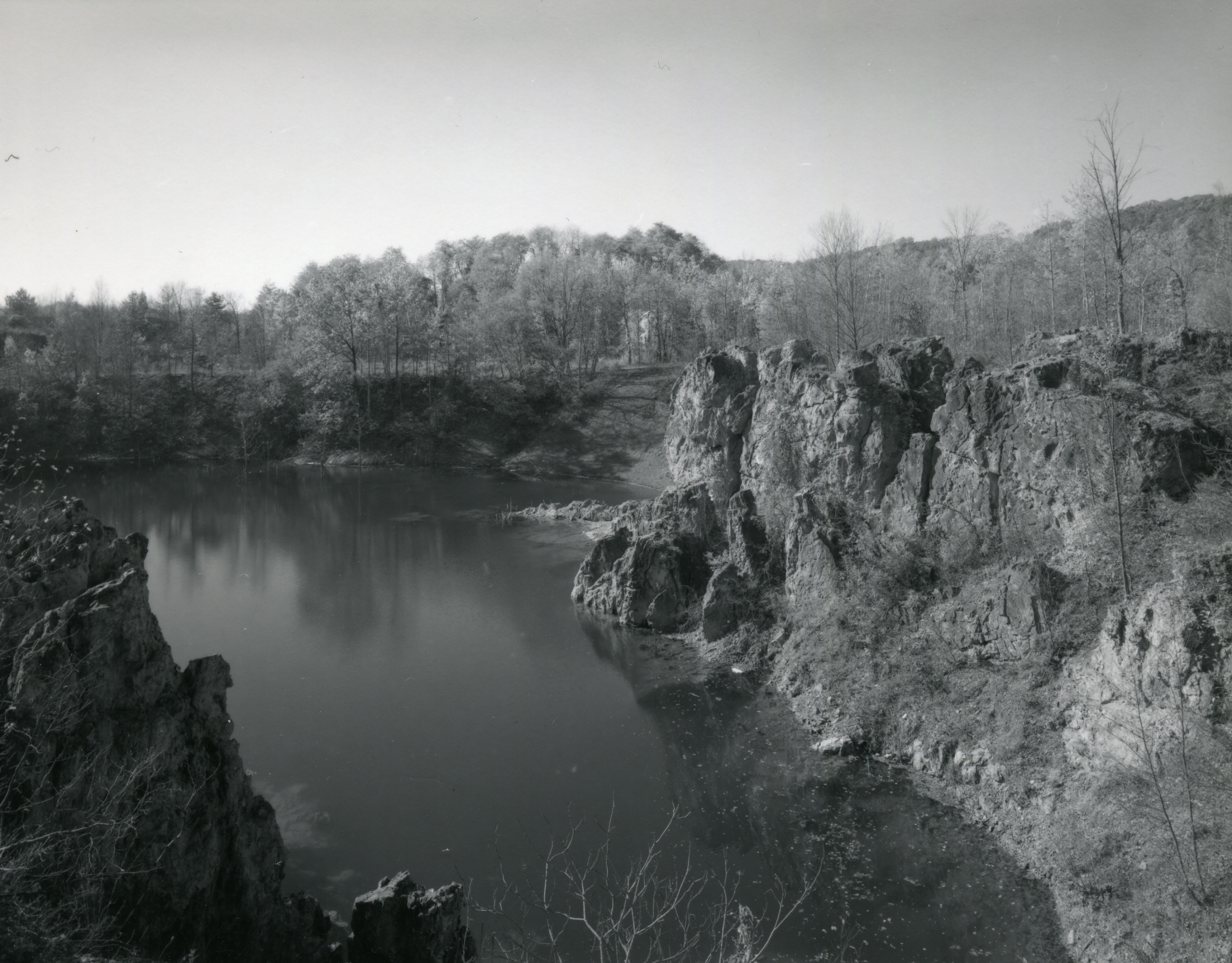
The Ueberoth Mine
The Lehigh Valley offered waterways, anthracite coal, railroads, labor, and national markets. Civil War demand for zinc grew for use in brass and ammunition, and in 1865 the Lehigh Zinc Company developed a sheet-rolling technique that expanded its use in roofing and manufacturing. By 1870, five Saucon Valley mines were extracting zinc ore.
Zinc joined iron, coal, slate, cement, and steel in the Lehigh Valley’s interconnected industrial landscape.
By the late nineteenth century, local ore was no longer enough. After reorganizing as Lehigh Zinc and Iron in 1881, the company imported ore for processing and produced about one million pounds of metallic zinc, reflecting the industry’s growing scale and national reach. [3]
Building Zinc—and a Town—at Palmerton
In the late 1890s, the New Jersey Zinc Company began consolidating many of the region’s zinc operations, acquiring major competitors, including Lehigh Zinc and mines in the Saucon Valley, centralized at Lehigh Gap; a location with access to water, land, anthracite coal, and transportation connections. [4]
The New Jersey Zinc Company opened a Palmerton operation at the end of the nineteenth century. What began as a comparatively modest experimental metal plant expanded rapidly. [5]
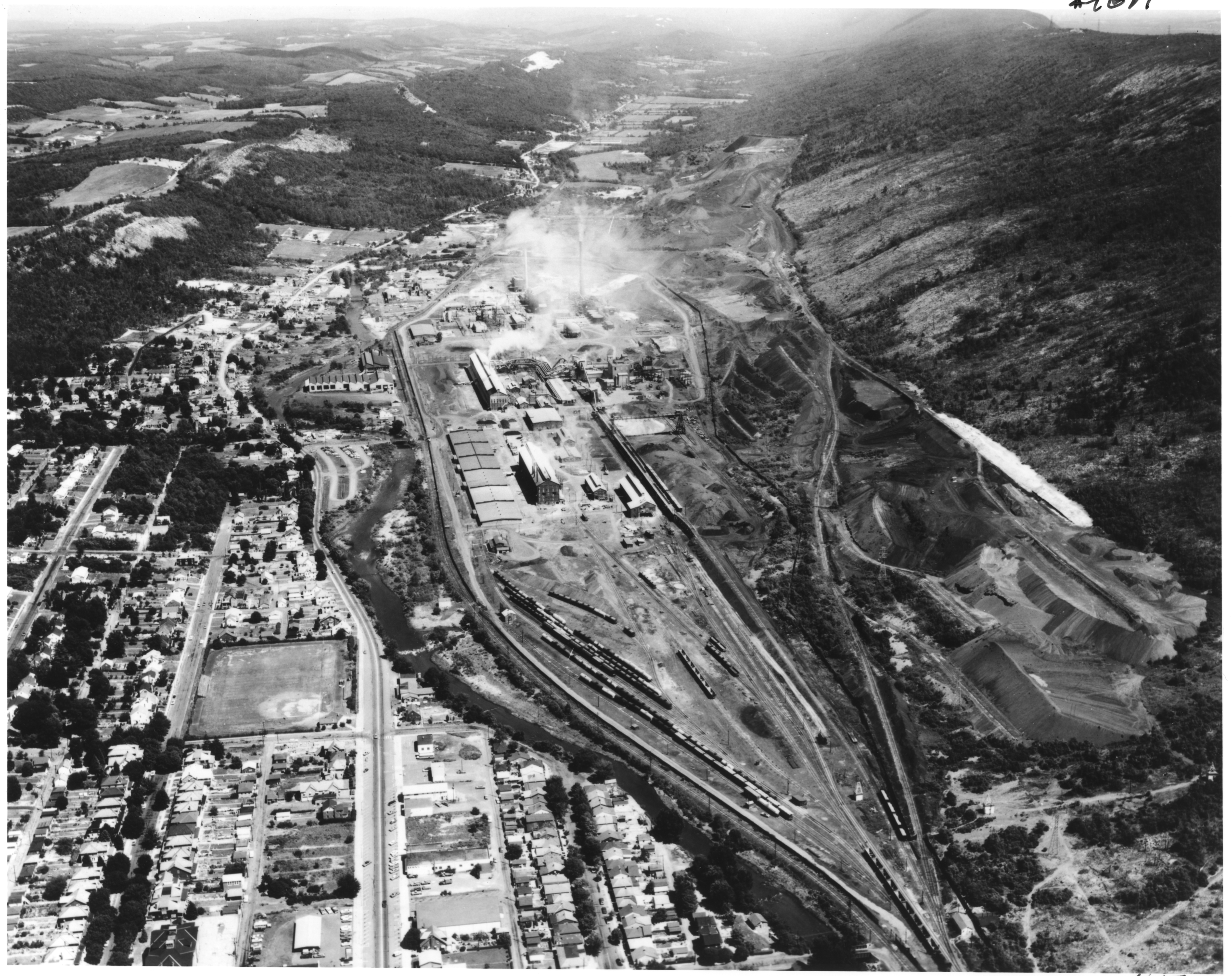
The factory did more than reshape the industrial landscape. The company also helped create Palmerton itself. Starting as a sprawling industrial complex of more than thirty buildings covering about 200 acres, around 1899, the company laid out streets and constructed worker housing, a hospital, a park, a community center, and sewer infrastructure.[6]
For generations of residents, zinc meant employment, community institutions, and economic stability and became a site of technological experimentation. That experimentation is where Palmerton’s story begins to intersect with a child’s toy box.
Making Zinc Better for Die Casting
Early zinc alloys could warp, corrode, weaken, and deteriorate with age.
In 1928, Palmerton metallurgists Willis McGerald Peirce and Edmund Arnold Anderson patented a more stable zinc die-casting alloy for the New Jersey Zinc Company.[7]
New Jersey Zinc’s metallurgical work during this period contributed to the development of the family of zinc-based die-casting alloys commonly known as Zamak. The name reflects the alloy’s principal components: zinc combined with aluminum, magnesium, and copper.
This transformed manufacturing. Die casting forces molten metal into molds, enabling fast, economical production of detailed, identical objects. Door handles, hardware, machine components—and toys—could all benefit.
Enter TootsieToy
Hundreds of miles west of Palmerton, Chicago’s Dowst Manufacturing Company had been experimenting with miniature cast-metal products for decades: TootsieToy. By the 1920s, Dowst was producing cars, trucks, airplanes, military vehicles, dollhouse furniture, and other miniature objects. The toys were small, inexpensive, and particularly well suited to mass production. [8]
Then came 1933.
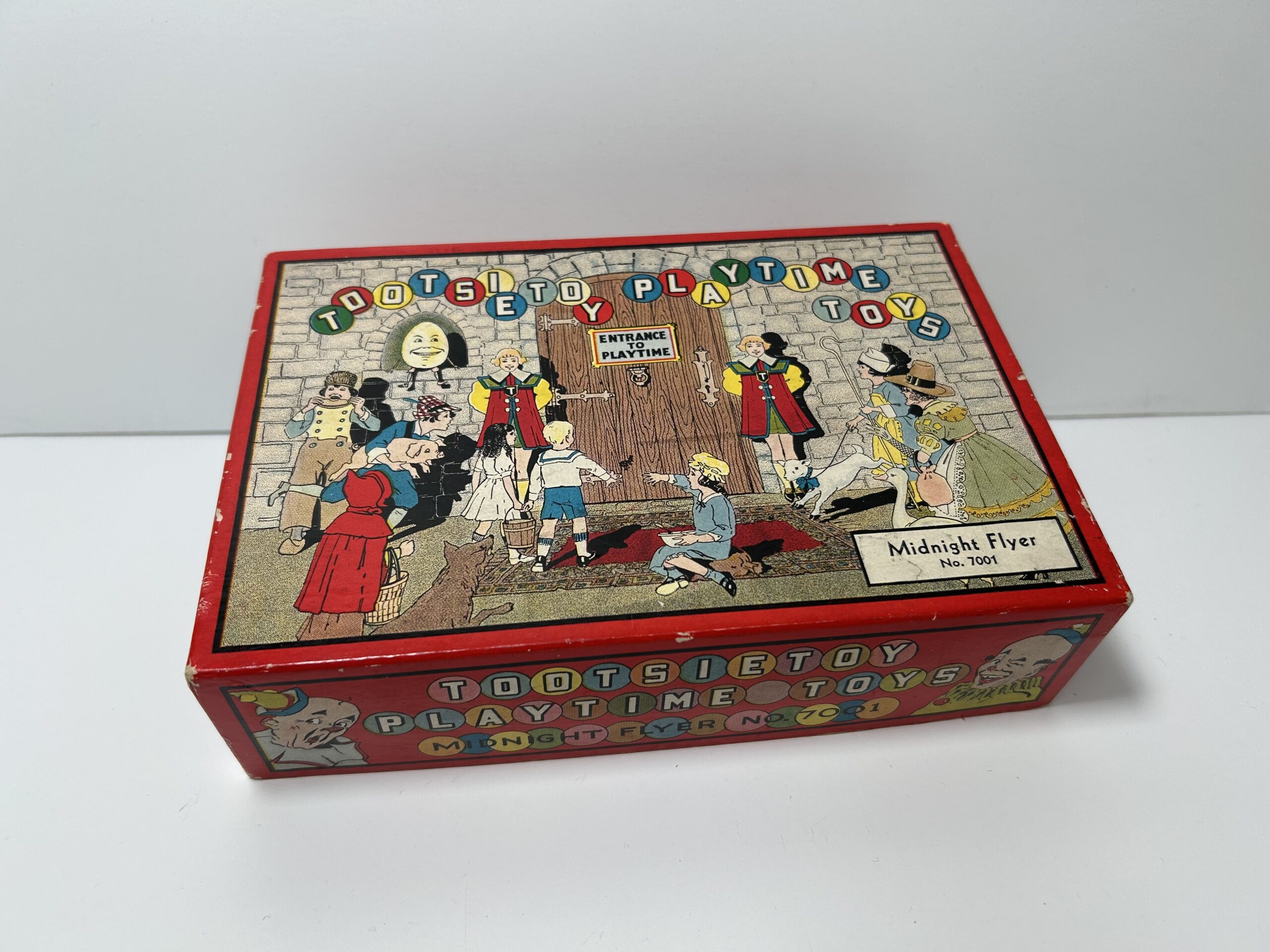
That year’s TootsieToy catalog introduced important changes, including more sophisticated automobile designs and rubber tires. More significantly for our story, Dowst replaced its older lead-based casting formula with the harder zinc alloy Zamak. Contemporary toy histories identify the change as an important technological step that produced lighter, stronger castings and helped establish zinc alloys as a standard material for miniature die-cast vehicles. [9]
New Jersey Zinc’s Palmerton metallurgists were directly involved in developing improved zinc-base die-casting alloys, and TootsieToy adopted Zamak shortly afterward. That gives us a clear technological connection between the two histories; the metallurgical expertise being developed by New Jersey Zinc helped make the zinc-alloy die-casting revolution possible, and companies such as TootsieToy quickly demonstrated what that revolution could mean for everyday consumer goods.
When the Toy Box Was a More Dangerous Place
The shift from an older lead casting formula to zinc also places TootsieToy inside another story: the changing understanding of toy safety.
Today, parents would probably be alarmed by some children’s products available during the first half of the twentieth century. Lead could appear in metal alloys and painted surfaces, while toys might also feature sharp edges, small detachable parts, electrical components, or mechanical designs that would not satisfy modern safety requirements.
A 1931 Make-A-Toy casting set from the period that allowed families to manufacture their own toy soldiers. The kit included molds, enamel paint, and bars of lead that users melted and poured into the molds. The instructions even depicted the casting process as a suitable activity for boys with adult involvement. [10]
Modern toy-safety regulation and testing developed gradually. The American toy industry began organizing voluntary safety efforts in the early 1930s, while many of the comprehensive standards familiar today came considerably later.[11]
Today the Centers for Disease Control and Prevention today warns that antique and older toys may contain lead in paint or in metal alloys such as pewter, brass, and tin mixtures. Vintage painted objects should therefore be treated differently from modern toys intended for regular children’s play.[12]
Was Zinc the Safer Answer?
From the toys perspective, moving away from a lead-heavy casting formula toward a predominantly zinc alloy seems like an uncomplicated improvement.
Back in Palmerton, though, “safer” becomes more complicated.
For nearly eighty years, the New Jersey Zinc Company’s Palmerton operations generated enormous quantities of industrial waste. EPA records state that approximately 33 million tons of smelting waste accumulated at the site. Heavy metals including zinc, lead, and cadmium-contaminated soil, dust, groundwater, and waterways, while industrial emissions contributed to the severe defoliation of Blue Mountain. The Palmerton Zinc Pile was placed on the federal Superfund National Priorities List in 1983.[13]
Thousands of acres stripped of vegetation as sulfur dioxide and heavy-metal emissions transformed parts of the mountain into a landscape generations of residents remembered as almost lunar. Aquashicola Creek and the Lehigh River also suffered from contamination. [14]
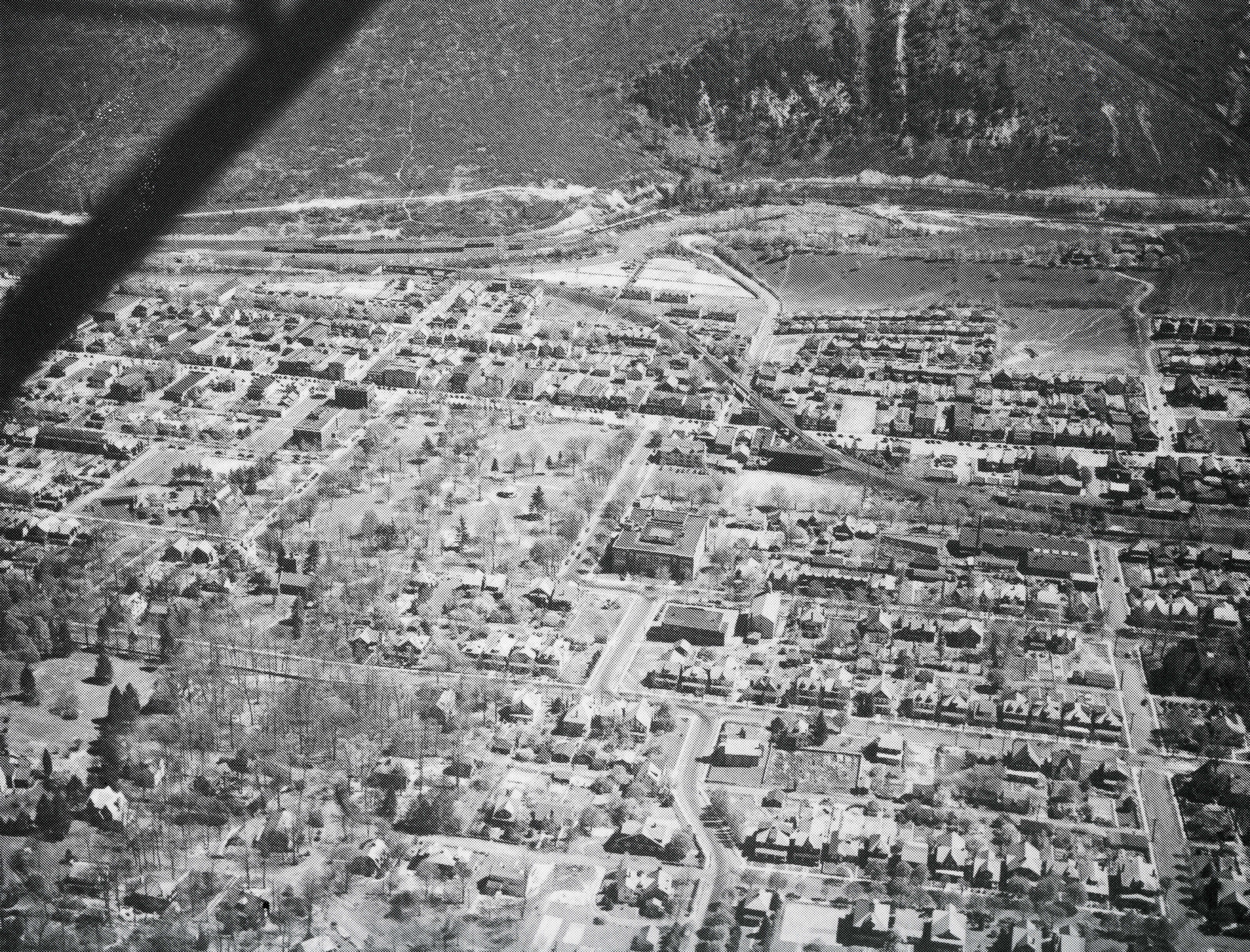
Aerial view of Palmerton
Extensive remediation has followed, including stabilization and revegetation of damaged land, treatment of contaminated areas, residential soil testing, and ecological restoration. The recovery of parts of Blue Mountain and the work surrounding today’s Lehigh Gap Nature Center provide another chapter in the story: industrial landscapes are not frozen in the moment of their damage. They can also become places of restoration, research, and community stewardship.[15]
A metallurgical innovation could make a consumer product more durable and reduce one type of hazard while the manufacture of its underlying material-imposed hazards elsewhere. Industrial history rarely offers a clean dividing line between “good” and “bad” technologies. Instead, it asks us to follow connections.
Back to the 1930s TootsieToy car again, to a child, it was simply a toy.
To the manufacturer, it represented precision dies, efficient production, inexpensive materials, and a product that could be sold during the difficult years of the Great Depression.
To a metallurgist, its zinc alloy represented years of experimentation intended to produce stronger and more reliable castings.
And from the perspective of Delaware & Lehigh Corridor, its metal opens an even longer history: the Saucon Valley’s zinc deposits, Samuel Wetherill’s nineteenth-century experiments, Lehigh Valley furnaces, anthracite coal, transportation routes through Lehigh Gap, the rise of New Jersey Zinc, and the company town of Palmerton.
Then the story continues beyond production into environmental consequences and recovery.
That is one of the pleasures and responsibilities of studying material culture. An everyday object can connect people who’ve never met and places hundreds of miles apart. A toy purchased for a few cents could embody mining, chemistry, transportation, labor, engineering, consumer culture, and changing ideas about safety.
The history of that toy does not begin at the toy store.
It begins with the landscape.
And once we follow the metal backward, even the smallest object can reveal how deeply the industries of the Delaware & Lehigh National Heritage Corridor reached into American life.
Sources
[1] Kaas, L. Michael (2016). “The History of Zinc Mining in Friedensville, Pennsylvania”. The Mining History Journal. 23: 17–42.
[2] Morning Call. “Remembering the Men of Zinc Keystone Ramblings.” Morning Call, September 15, 1985. https://www.mcall.com/1985/09/15/remembering-the-valleys-men-of-zinc-keystone-ramblings/.
[3] https://canals.org/2021/08/25/from-anthracite-coal-to-zinc/
[4] https://canals.org/2021/08/25/from-anthracite-coal-to-zinc/
[5] https://canals.org/2025/09/10/from-industry-to-ecology-the-story-of-lehigh-gaps-transformation/
[6] Historic American Engineering Record, Creator, Fred Brenckman, and Duncan Hay, Lowe, Jet, photographer. New Jersey Zinc Company, Palmerton Plant, Between Route 248 & Hazard Road at Hazard Hamlet, Palmerton, Carbon County, PA. Pennsylvania Carbon County Palmerton, 1968. Documentation Compiled After. Photograph. https://www.loc.gov/item/pa1878/.
[7] https://patents.google.com/patent/US1663215
[8] https://www.tootsietoys.info/
[9] https://www.tootsietoys.info/
[10] https://www.antiquetoys.com/product/ac-gilbert-lead-toy-casting-kit-for-sale-kaster-kit/?v=0b3b97fa6688
[11] Lawrence, Joan. “Building Blocks – A Global Effort for Safe and Fun Play.” ISO Focus+ 1, no. 3 (March 2010): 13–15. https://doi.org/https://www.iso.org/files/live/sites/isoorg/files/news/magazine/ISO%20Focus%2B%20%282010-2013%29/en/2010/ISO%20Focus%2B%2C%20March%202010.pdf .
[12] https://cdc.gov/lead-prevention/prevention/consumer-products.htm
[13] https://cumulis.epa.gov/supercpad/cursites/dsp_ssppSiteData2.cfm
[14] https://canals.org/2025/09/10/from-industry-to-ecology-the-story-of-lehigh-gaps-transformation/
[15] https://www.epa.gov/superfund-redevelopment/superfund-sites-reuse-pennsylvania



Join the Conversation!